
System comparison • Epoxy • Polyaspartic • Project fit
Epoxy vs. Polyaspartic Floor Coatings: What’s the Difference?
Compare epoxy and polyaspartic floor coating roles, preparation, sunlight, timing, finish options, and project fit before planning an Eastern Iowa floor.
- Compare compatible system roles rather than choosing from a chemistry name alone
- Review preparation, sunlight, traffic, finish, schedule, and return-to-use factors
- Compare epoxy, polyaspartic, project types, preparation, real projects, or request an estimate
Compare two strong options for your floor
See where epoxy and polyaspartic can add the most value
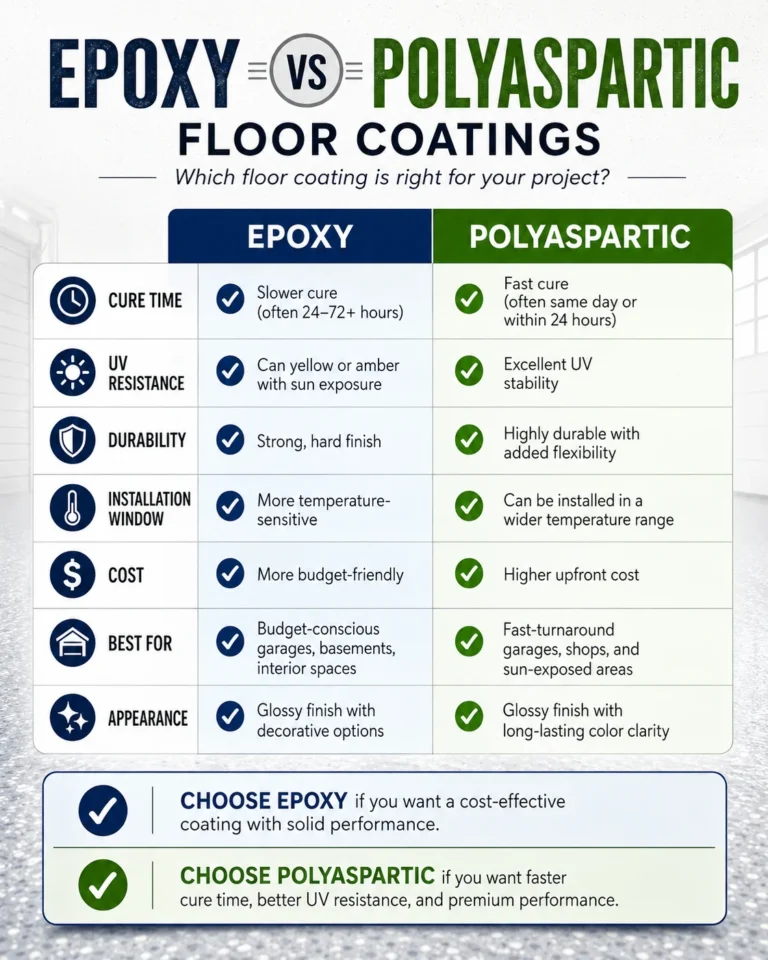
Epoxy and polyaspartic can both be excellent choices. Epoxy is often used where build, bonding, color, or decorative depth is valuable. Polyaspartic is often selected for fast-curing layers, clear protection, decorative flake systems, or areas where sunlight resistance matters. Many successful floors use the strengths of more than one compatible layer.
The best choice comes from your space, the finished look you want, how the floor will be used, and the schedule that fits your property. Corridor can help match those priorities to a complete coating system.
First principle
Think in compatible layers—not competing labels
A professional floor coating may include several steps and materials. Calling the entire finished floor “epoxy” or “polyaspartic” can hide the decisions that actually control the scope.
Concrete and preparation
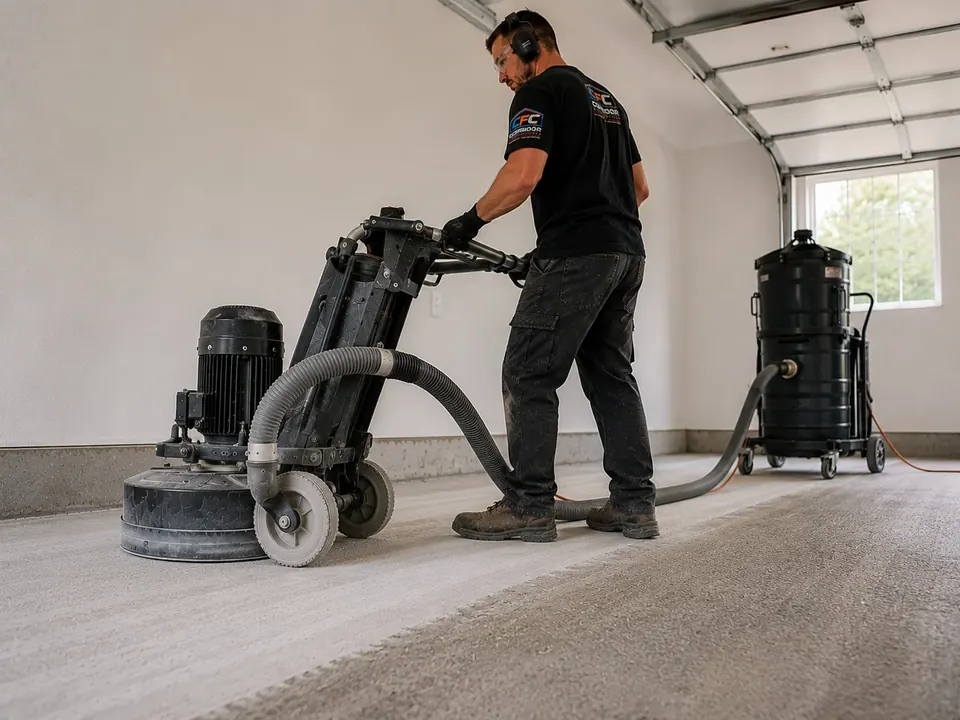
Remove weak or incompatible material, create the required surface profile, address accessible details, and complete common repairs included in the scope.
Primer or base layer
Select a compatible material around the concrete, installation conditions, build needs, color direction, and complete system design.
Decorative or functional layer
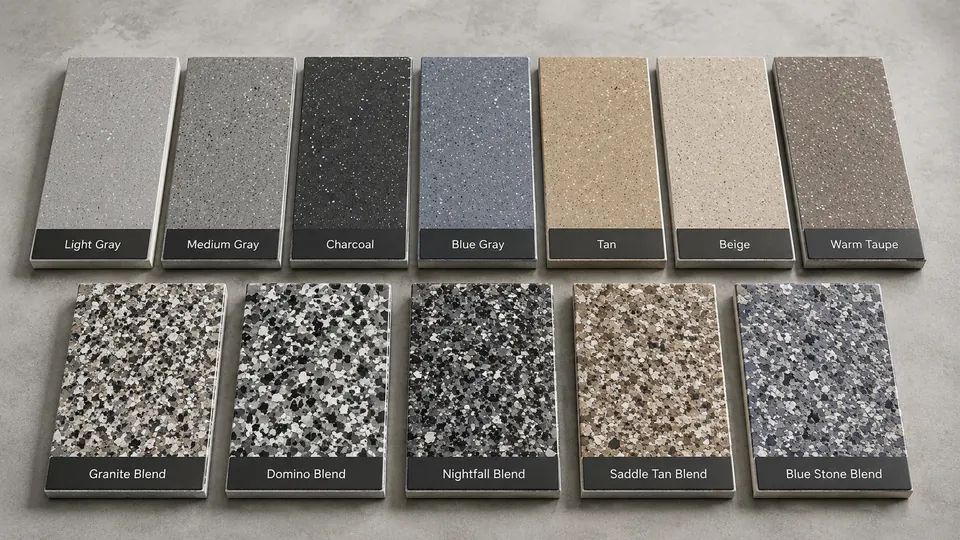
Solid color, metallic movement, decorative flake, texture, visual density, or other finish choices are coordinated with how the space is used.
Protective finish
The clear or final layer helps complete sheen, texture, appearance, cleaning characteristics, exposure planning, and return-to-use requirements.
Side-by-side planning guide
Epoxy vs. polyaspartic: compare the project factors that matter
These are general planning tendencies, not promises for every product. Product data, site conditions, preparation, compatible layers, and installer procedures control the actual recommendation.
| Project factor | Epoxy considerations | Polyaspartic considerations |
|---|---|---|
| Common system role | May serve as primer, build coat, base coat, solid-color layer, metallic layer, or another compatible interior role. | May serve as a fast-curing base or clear layer, decorative flake component, protective finish, or another compatible role. |
| Working window | Some products provide more placement and working time, depending on formulation and conditions. | Many products have a shorter working window, making planning, crew coordination, temperature, and application sequence especially important. |
| Return-to-use potential | Timing varies by product, layers, temperature, repairs, removal, thickness, and required cure. | Often selected when a faster return may be useful, but preparation, repairs, layer count, weather, and product requirements still control the schedule. |
| Sunlight and color stability | Exposure performance depends on the full system and protective finish; some epoxy materials can change appearance under ultraviolet exposure. | Some products are selected where ultraviolet stability matters, especially near open doors, windows, entries, or suitable exterior applications. |
| Decorative options | Can support solid-color, metallic, decorative, and compatible flake system designs. | Commonly used in decorative flake and clear-finish systems, with color, broadcast, sheen, and texture selected for the space. |
| Preparation requirement | Professional preparation and a sound substrate remain essential. | Professional preparation and a sound substrate remain essential. |
| Best fit | The option that fits the actual concrete, exposure, use, appearance, compatible layers, budget, schedule, and return-to-use plan. | |
Match the system to the space
The same answer does not fit every garage, basement, shop, business, or outdoor slab
Use the room and traffic pattern to narrow the questions before discussing chemistry.
Vehicles, winter residue, sunlight, storage, and tire paths
Review the door zone, existing paint, cracks, drains, salt and snowmelt, cabinets, cleaning, decorative direction, and vehicle-return needs.
Explore garage coatings → BasementInterior appearance, moisture evidence, utilities, and furniture
Review lower-level use, lighting, stairs, posts, mechanical areas, old adhesives or paint, comfort, cleaning, and foot-traffic timing.
Explore basement coatings → Shop or facilityEquipment, wheels, fluids, cleaning, and shutdown limits
Map traffic lanes, fixed equipment, impacts, contamination, drains, work cells, customer areas, phasing, and return by load.
Explore shop coatings → Exterior or sun-exposedUltraviolet exposure, drainage, weather, texture, and maintenance
Separate indoor assumptions from outdoor conditions. Review slope, water movement, sun, shade, freeze-thaw exposure, edges, traction, and weather windows.
Explore exterior coatings →Great results begin with the right surface preparation
Preparation helps either system bond, look better, and perform as intended
Professional preparation creates the clean, properly profiled surface the selected system needs. The estimate can account for existing paint or coating, common repairs, edges, drains, contamination, and other details so the finished floor starts with a strong foundation.
- Identify existing paint, sealer, coating, adhesive, contamination, or weak material.
- Use the preparation method and surface profile required by the selected system.
- Define accessible detail work, common crack or pitted-area repairs, and required removal.
- Confirm that primer, base, decorative layer, and protective finish are compatible.
- Plan temperature, humidity, ventilation, weather, access, and installation sequence.
Plan a schedule that fits your space
The right system can balance performance with a practical turnaround
Some polyaspartic layers can support a faster turnaround, while epoxy can provide useful working time, build, color, or decorative depth. Your estimate should outline the complete installation plan and give clear guidance for when walking, storage, vehicles, equipment, or normal operations can return.
Questions that produce a better estimate
Ask how the complete system fits your floor—not which chemistry wins
A useful proposal should explain enough of the system and process for you to understand the scope without requiring you to become a coatings chemist.
How will the concrete be prepared?
Ask about existing material, mechanical preparation, edges, cracks, pitting, contamination, and what is included or excluded.
What role does each layer serve?
Ask which layer is the primer or base, where decorative material fits, what protects the surface, and why the layers are compatible.
How does the system fit this exposure?
Discuss sunlight, weather, moisture evidence, chemicals, tires, impacts, cleaning, temperature, and indoor versus outdoor use.
When can each load return?
Request separate guidance for walking, furniture, storage, vehicles, equipment, cleaning, chemicals, and normal operations.
Appearance comes from the complete finish plan
Compare finished floors after understanding the system underneath
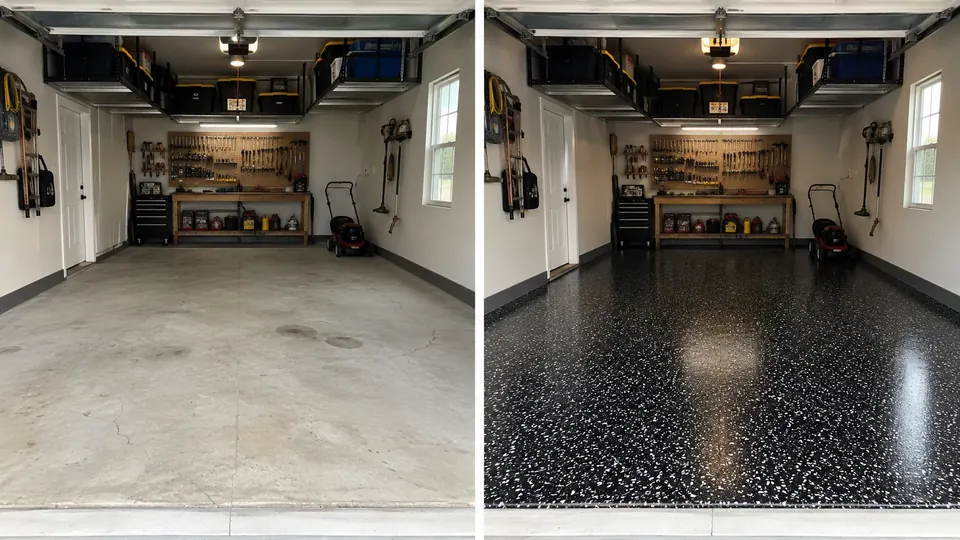
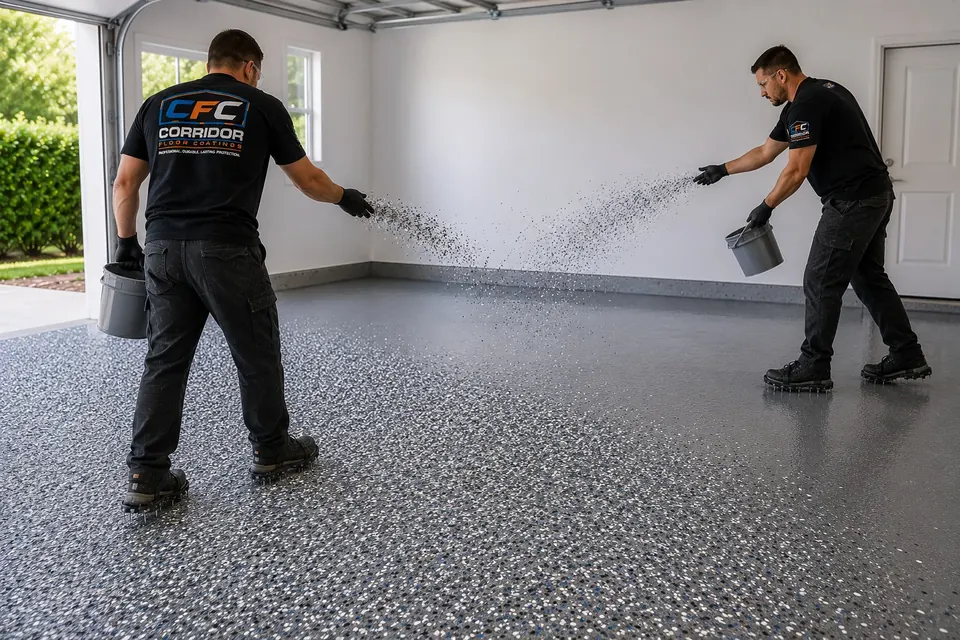
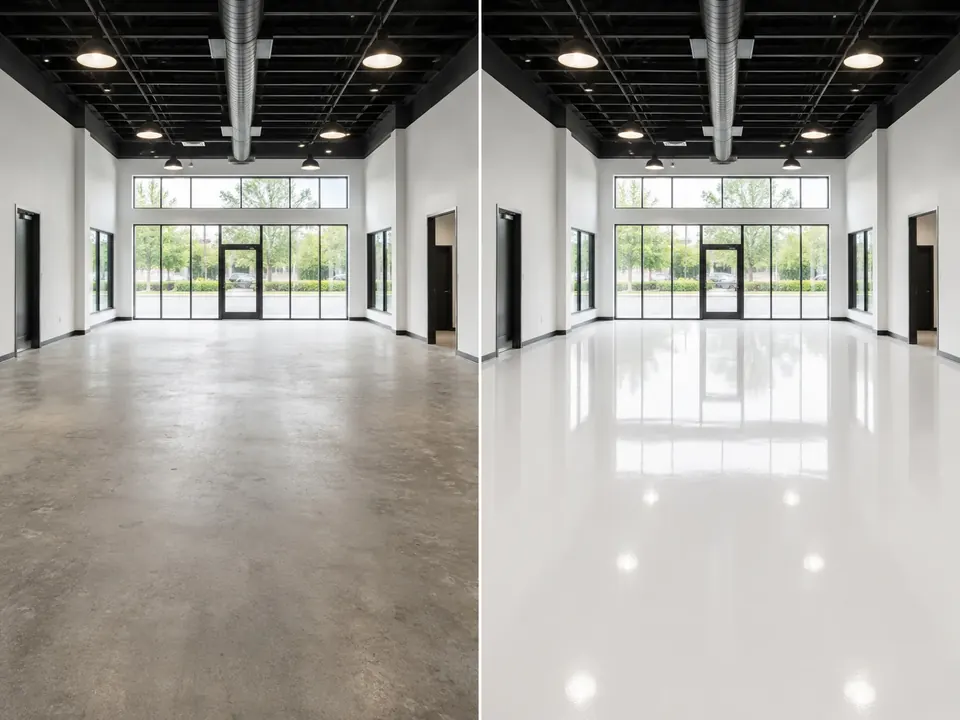
Project photos can help narrow color, decorative flake, sheen, visual movement, and contrast. They cannot show preparation, compatibility, cure requirements, or whether the same system fits your slab.
System comparison questions
Epoxy vs. polyaspartic floor coating FAQs
Is polyaspartic always better than epoxy?
No. The chemistry name alone does not decide project quality. Surface preparation, concrete condition, compatible layers, exposure, traffic, finish goals, installation conditions, and the way the floor must return to use all matter.
Can one floor coating system use both epoxy and polyaspartic materials?
Yes. Depending on the selected products and project conditions, a compatible system may use an epoxy component for one layer and a polyaspartic component for another. The complete layer design matters more than treating the project as a one-word product choice.
Which option is better for a garage floor?
Either chemistry may be part of a suitable garage system. The recommendation should account for the concrete, existing paint or coating, cracks, winter salt and snowmelt, sunlight near the door, tire traffic, storage, cleaning, finish preference, and vehicle-return schedule.
Does polyaspartic cure faster than epoxy?
Polyaspartic materials are often associated with faster curing and shorter working windows, but actual installation and return timing depend on the specific products, layer thickness, temperature, humidity, floor condition, repairs, removal work, and manufacturer requirements.
Which coating handles sunlight better?
Some polyaspartic products are selected where color stability under ultraviolet exposure is important. That does not make every polyaspartic product suitable for every exterior slab, and the entire system still needs to match sunlight, weather, drainage, texture, and maintenance conditions.
Does the coating choice matter more than concrete preparation?
No coating label can make up for a weak, contaminated, dusty, sealed, peeling, or poorly prepared surface. Mechanical preparation, removal of incompatible material, detail work, common repairs, and a sound substrate are foundational to the coating plan.
Do I need to choose epoxy or polyaspartic before requesting an estimate?
No. Share the space, current concrete, existing material, photos, daily use, sunlight or weather exposure, cleaning needs, access, schedule, and finished look. Corridor Floor Coatings can organize the compatible preparation, layers, finish, and return-to-use plan.
Ready to Match a Complete Coating System to Your Floor?
Share the property, space, current concrete, existing material, daily use, sunlight or weather exposure, cleaning needs, access, schedule, and finished result you want. Corridor Floor Coatings will organize the next step.