
Garage colors • Decorative flake • Lighting • Maintenance
How to Choose Garage Floor Coating Colors
Compare garage floor coating colors, flake contrast, lighting, dirt visibility, cabinets, vehicle use, texture, and maintenance before choosing a finish.
- Compare brightness, dirt visibility, flake contrast, texture, and surrounding finishes
- See how light, medium, dark, warm-neutral, and accent directions behave in a garage
- Choose from the actual floor, lighting, cabinets, walls, vehicles, and cleaning expectations
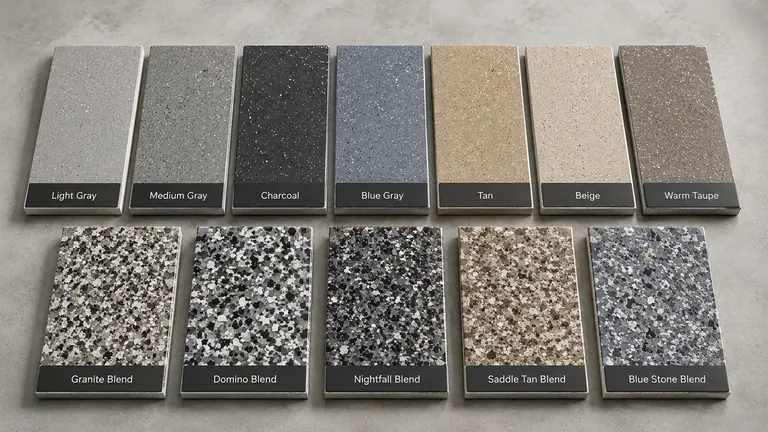
A color sample is a starting point—not the whole decision
Choose the floor from the real garage around it
The best color is the one that fits how the garage looks, works, gets dirty, and gets cleaned. Daylight, ceiling fixtures, walls, cabinets, garage doors, storage, vehicles, workbenches, road salt, leaves, oil, dust, and the coating’s flake and texture all change the finished appearance.
A useful selection process narrows a color family first, then checks contrast, decorative movement, cleaning expectations, compatible system options, and physical samples inside the actual garage.
The floor should solve several visual jobs at once
Balance brightness, contrast, camouflage, and long-term flexibility
No finish hides every kind of dirt. A floor that disguises dark oil may reveal pale dust. A very light floor may brighten the room but show tire marks. A bold accent may look excellent beside today’s vehicle and compete with tomorrow’s cabinets.
Brightness
Light values reflect more available light; dark values absorb more and create stronger visual weight.
Contrast
Low-contrast blends read calmer from a distance; high-contrast chips create more visible movement.
Camouflage
Variegated mid-tones often disguise a broader mix of everyday debris than a very light or very dark solid field.
Flexibility
Balanced neutrals usually coordinate with future paint, storage, cabinets, vehicles, and resale changes more easily.
Color families at a glance
Start with the visual direction—then test the exact blend
These are planning tendencies, not guarantees. Product availability, base color, chip blend, broadcast, texture, topcoat, sheen, concrete, and lighting influence the installed result.
| Color direction | What it can do well | What to watch | Typical feel |
|---|---|---|---|
| Light gray & silver | Makes a dim garage feel more open and shows the decorative blend clearly. | Can reveal dark tire marks, oil, leaves, and tracked soil; brighter is not maintenance-free. | Light, clean, modern |
| Medium gray & balanced neutrals | Coordinates with many walls, doors, cabinets, vehicles, and storage systems. | Appearance still changes with chip contrast, sheen, texture, and lighting. | Versatile, practical, balanced |
| Charcoal & dark blends | Creates strong contrast and can support a dramatic workshop or showcase look. | May show pale dust, lint, water spots, salt residue, and light scratches more than expected. | Bold, high-contrast, industrial |
| Tan, beige & warm neutrals | Works with cream walls, wood tones, brown cabinets, stone, brick, and warmer homes. | Undertones should be checked beside cool-gray doors, bright-white walls, and blue lighting. | Warm, softer, residential |
| Blue-gray & accent blends | Adds personality while retaining enough neutral material to connect with the garage. | Strong accent colors can compete with cabinets, vehicles, signs, or future décor. | Custom, energetic, branded |
Light versus dark is not the same as clean versus dirty
Choose the value around the debris your garage actually sees
For a parking-first Iowa garage, compare a sample beside the vehicle path after normal winter use—not only under perfect showroom lighting.
The visible floor is more than one named color
Base coat, flakes, coverage, texture, and topcoat build the final appearance together
Base color
Influences the background and can affect how open areas between chips read.
Flake palette
Combines two or more values or hues that visually blend from normal standing distance.
Chip size and broadcast
Changes movement, coverage, contrast, and how much of the base remains visible.
Texture and clear finish
Affects light reflection, depth, cleanability, traction direction, and how the same palette photographs.
Coordinate—do not force an exact match
Read the floor beside the permanent features first
Walls can be repainted and vehicles can change. Garage doors, cabinets, masonry, fixed worktops, trim, stairs, and adjacent interior finishes may influence the space longer.
Check undertone and reflected light
Cool white walls can sharpen blue-gray chips; warm cream walls can make the same sample appear cooler by comparison.
Choose contrast deliberately
Dark cabinets can benefit from a lighter floor, while bright cabinetry may support a medium or charcoal field.
Review the garage open and closed
Daylight near the opening can wash out color while the rear of the garage remains much darker.
Decide what should lead visually
A neutral floor can support a vehicle or tool wall; a bold floor becomes a primary design feature itself.
Different garages deserve different visual priorities
Match the palette to the garage’s main job
Color does not change the need for correct preparation or compatible layers, but it can support the way the room is used and maintained.
Balanced, forgiving blend
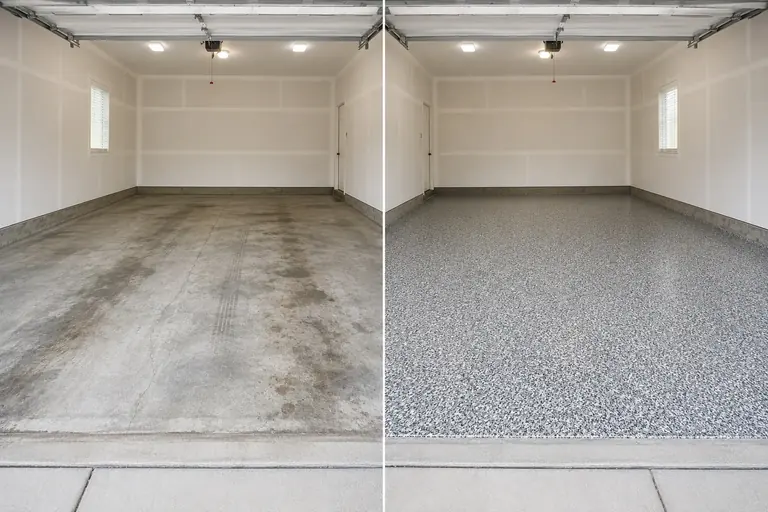
Consider medium gray or warm neutral variegation that softens mixed dirt, snowmelt residue, leaves, and tire-path variation.
Useful visibility without glare
A lighter-to-medium field can help find dropped parts, while controlled contrast and sheen reduce visual busyness around tools.
Intentional contrast or accent
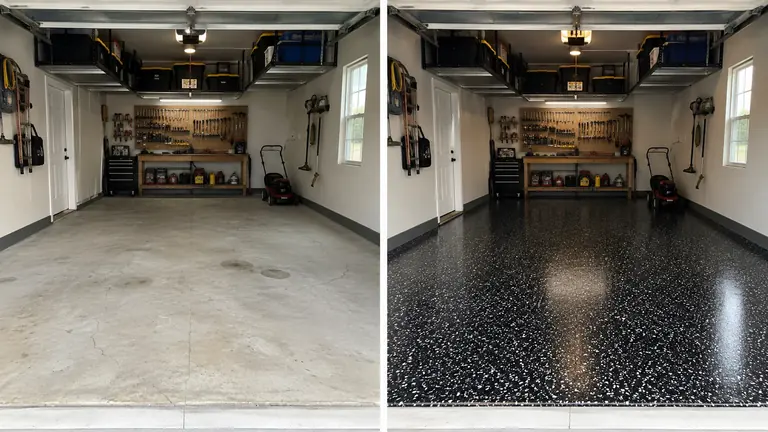
Charcoal, black, red, blue, or higher-contrast blends can become part of the display when lighting and maintenance support the look.
Broadly compatible neutral
A restrained medium gray, greige, or tan direction can coordinate with more wall, cabinet, vehicle, and tenant changes.
A practical sample review
Compare physical directions in four conditions before approving the finish
- 01
Stand at the garage door
View the palette from the driveway with the door open, where visitors first read the finished floor.
- 02
Move into the darkest area
Check the rear corners, cabinet shadows, stairs, storage, and spaces farthest from daylight.
- 03
Turn on nighttime lighting
Warm, neutral, or cool fixtures can shift gray, beige, blue, and white chips noticeably.
- 04
Step back to normal viewing height
Flakes visually blend from several feet away; a close-up chip photo exaggerates individual pieces and contrast.
Use photos to choose a direction, then compare physical samples in your garage. Lighting, screen brightness, surrounding colors, texture, and sheen can make the same finished floor look different from one photo to another.
Real Eastern Iowa palette directions
See how color changes the character of a finished garage
These projects demonstrate visual directions. The exact concrete, preparation, compatible system, texture, flake, sheen, lighting, and return-to-use plan still need to match the actual project.
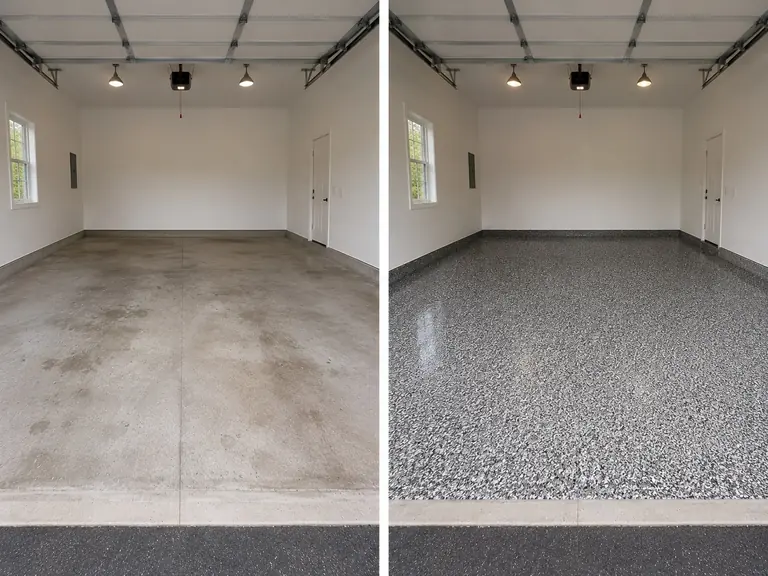
Balanced gray decorative flake
A medium gray, black, white, and lighter-chip blend creates movement without turning the floor into a single flat color.
High-contrast black flake
A darker floor can feel polished and dramatic, but pale dust and winter salt may stand out against the black field.
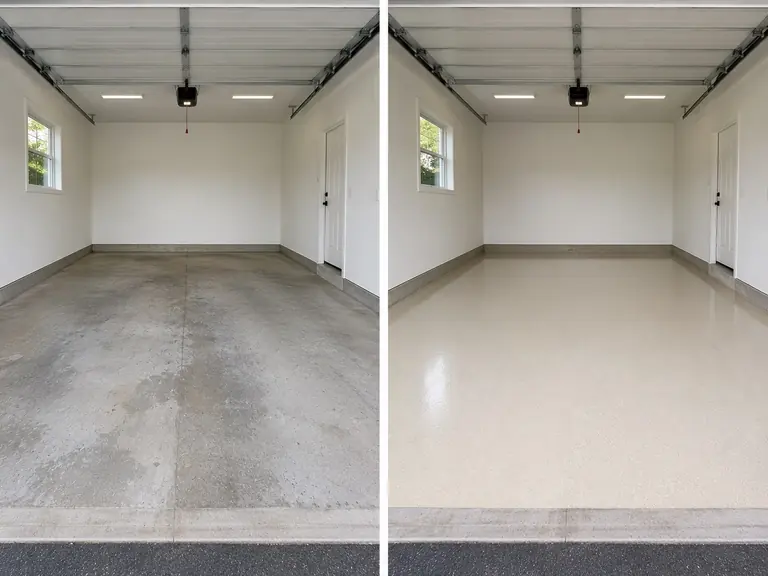
Warm light-tan finish
A low-contrast warm neutral can soften a bright white garage and coordinate with beige, cream, wood, or earth-tone finishes.
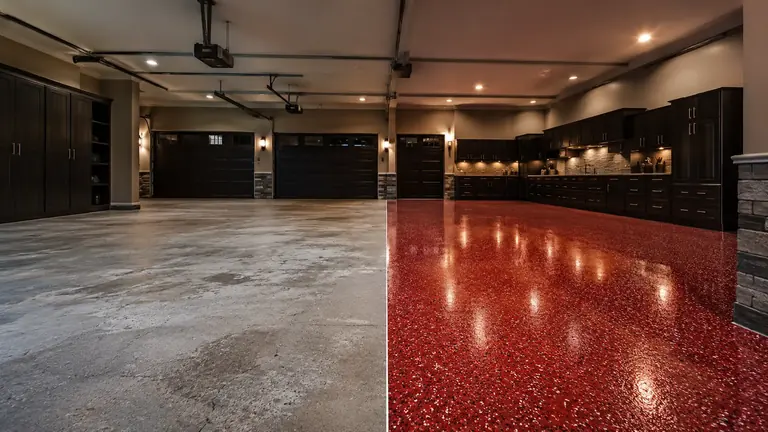
Bold red showcase direction
A saturated accent can become the room’s main design feature and should be checked against cabinets, lighting, vehicles, and long-term taste.
Move from inspiration to a floor-specific choice
A useful color decision follows the same four-step order
Define the garage’s main use
Parking, workshop, storage, display, rental use, pets, hobbies, carts, and traffic determine the visual and maintenance priorities.
Photograph the entire environment
Capture walls, doors, cabinets, fixtures, shadows, vehicles, thresholds, current concrete, and both daytime and nighttime lighting.
Narrow a family and contrast level
Choose light, medium, dark, warm neutral, cool neutral, or accent direction before debating tiny differences between individual chips.
Confirm the installed system
Review availability, physical samples, base color, flake blend, broadcast, texture, sheen, preparation, compatible layers, and maintenance guidance together.
You do not need to pick an exact blend before requesting an estimate. Share two or three directions you like and the reasons behind them. That is more useful than forcing a final choice before the garage and coating system are reviewed.
Start My Free EstimateColor, flake, lighting, matching, dirt, and sample questions
Garage floor coating color FAQs
What is the best color for a garage floor coating?
There is no universal best color. A balanced mid-tone gray or neutral decorative blend is versatile for many garages, but the right direction depends on natural and artificial light, wall and cabinet colors, vehicle and workshop use, dirt and salt patterns, desired contrast, cleaning expectations, and the available coating system.
Do light or dark garage floors look cleaner?
Neither stays visually cleaner in every garage. Light floors can brighten the room but may show dark tire marks, oil, leaves, and tracked soil. Very dark floors can show pale dust, lint, scratches, dried water, and road-salt residue. Variegated mid-tone blends often disguise a wider mix of everyday debris.
Why are gray garage floor colors so popular?
Gray works with many wall, door, cabinet, storage, and vehicle colors. Light gray can make the garage feel brighter, medium gray is balanced, and charcoal creates stronger contrast. The flake colors, coverage, lighting, texture, and sheen can make two gray floors look very different.
Should the garage floor match the cabinets or walls exactly?
Exact matching is usually less important than coordination. Select a floor that relates to the undertone and contrast of walls, cabinets, trim, doors, workbenches, and adjacent rooms without making every surface identical. A coordinated neutral often ages better than a forced exact match.
How do decorative flakes change the color of a garage floor?
The visible result comes from the base coat, flake colors, flake size, broadcast coverage, contrast, texture, and clear topcoat. A dense multi-color broadcast can read as an overall blended tone from standing height, while larger or higher-contrast chips create more visible movement.
Can a garage floor coating color be matched exactly from a screen or photograph?
Usually not reliably. Phone screens, camera exposure, white balance, room lighting, surrounding colors, batch variation, texture, sheen, and the installed broadcast can change appearance. Use physical samples as direction, then compare them in the actual garage under daytime and nighttime lighting.
What should I share when requesting help choosing a garage floor color?
Send the project address, wide photos from the garage door and interior corners, daytime and nighttime lighting, wall and cabinet colors, vehicle colors, storage and work zones, current concrete or coating, approximate size, cleaning expectations, examples you like, and how soon vehicles or storage must return.
Ready to Compare Garage Floor Colors in the Actual Space?
Send the address, garage size, wide daytime and nighttime photos, wall and cabinet colors, door and trim finishes, vehicles, storage and work zones, current concrete or coating, examples you like, cleaning expectations, desired contrast, and when vehicles or storage must return. Corridor Floor Coatings will help organize preparation, compatible layers, color family, flake direction, texture, sheen, and practical return to use.