
Free Estimates • State Licensed & Fully Insured • References Available
How to Maintain a Coated Concrete Floor
Learn how to sweep, wash, remove road salt, handle spills, protect coated concrete from equipment, and recognize damage before it spreads.
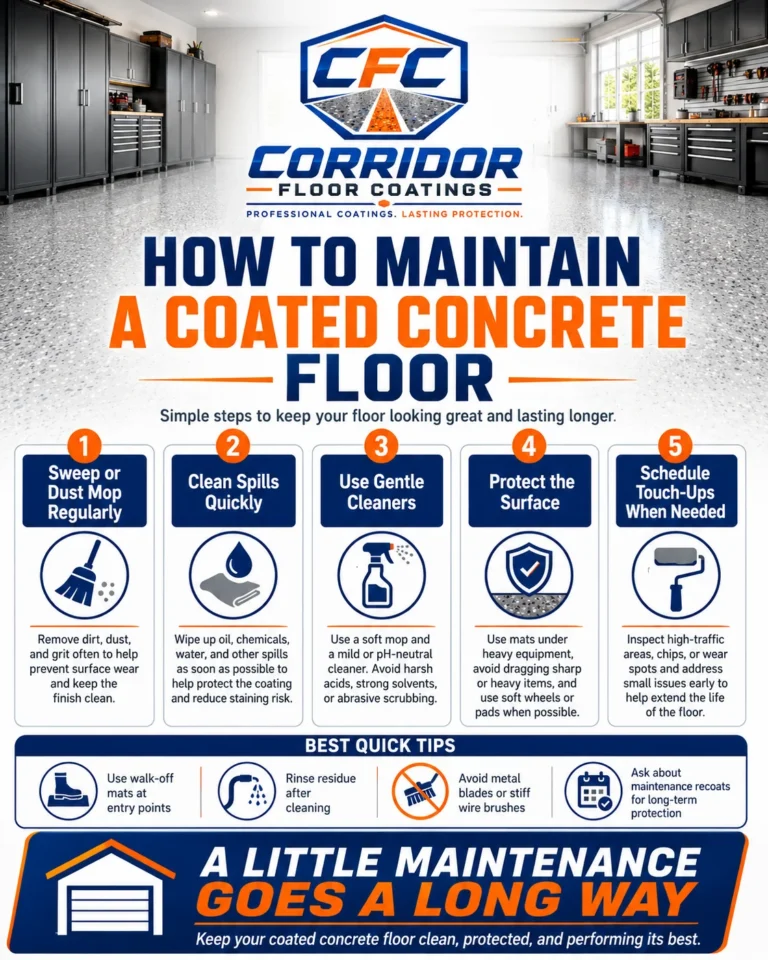
The best maintenance plan begins with the installed system
Protect the floor by removing what abrades, stains, softens, traps moisture, or concentrates load
A coated floor is easier to care for when the routine matches the actual coating, texture, exposure, traffic, and space. Maintenance is not one universal cleaner or schedule. A lightly used basement, winter garage, food-service corridor, auto shop, production floor, patio, and driveway face different debris, liquids, loads, and weather.
Keep the project’s care guidance, product information, color and system records, and installer contact with the property file. When stronger cleaning, pressure washing, chemical exposure, a new mat, heavy equipment, or repair is being considered, confirm compatibility first.
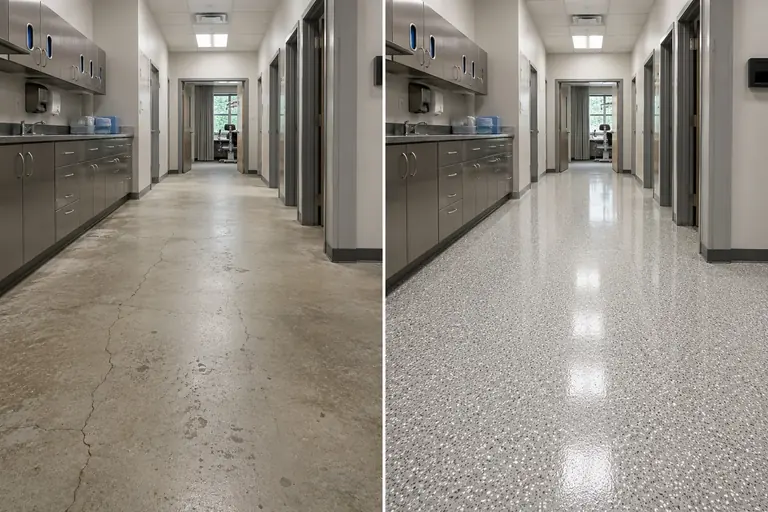
Five rules that work across most coated-floor environments
Use the mildest effective method and escalate only with compatibility information
Always follow the coating-system guidance and cleaner label. The floor should not be treated as chemically indestructible, structurally self-repairing, or immune to sharp impact because it has a finished surface.
Dry clean first
Remove loose abrasive material before adding water or moving a mop across the floor.
Match the cleaner
Use an approved product, dilution, dwell time, agitation tool, rinse method, and personal protection.
Collect dirty solution
Extraction, clean rinse water, squeegees, drains, or controlled pickup should remove contamination rather than spread it.
Protect concentrated loads
Use compatible broad pads or plates and avoid dragging tools, appliances, shelving, and machinery.
Document change early
Photograph unusual wear, softening, peeling, bubbles, discoloration, impact, or moisture before attempting aggressive correction.
A practical maintenance framework
Choose frequency from exposure—not from a generic calendar
A floor should be cleaned before debris or residue becomes repeatedly trafficked, difficult to remove, unsafe, or damaging. High-use zones may need daily attention while low-use spaces may only need periodic care.
| Maintenance trigger | What to look for | Practical response | Avoid |
|---|---|---|---|
| Loose debris | Dry grit, sand, road salt, metal filings, soil, leaves, sawdust, and food crumbs. | Vacuum, dust mop, soft broom, or other approved debris-removal method before wet cleaning. | Grinding abrasive particles into the finish with tires, carts, mops, or footwear. |
| Routine soil | Footprints, winter film, light grease, dust, tracked water, and general grime. | Use the approved cleaner at the correct dilution, agitate with a non-damaging tool, collect dirty solution, rinse when required, and allow the floor to dry. | Using too much product, leaving detergent film, or repeatedly moving dirty water across the floor. |
| Fresh spills | Oil, fuel, beverages, food, chemicals, cleaners, dyes, and process liquids. | Contain the spill, follow safety information, remove it promptly with compatible materials, clean the area with an approved method, and rinse residue when directed. | Allowing a spill to sit because the floor is coated or using an unknown solvent to chase the stain. |
| Winter residue | Road salt, brine, snowmelt, grit, deicers, slush, and tire-path film. | Remove grit first, wash with an approved solution, rinse or extract thoroughly, and repeat before residue becomes heavily built up. | Aggressive scraping, unapproved acids, or letting concentrated salty water collect at edges and drains. |
| Periodic inspection | Edges, joints, drains, thresholds, tire paths, equipment zones, exterior transitions, and prior repair areas. | Look for changes in sheen, scratches, impact damage, discoloration, lifting, bubbles, soft areas, cracks, or moisture evidence and document anything unusual. | Waiting until a small damaged area has been exposed to repeated water, chemicals, traffic, or movement. |
Eastern Iowa garage care
Winter maintenance is mostly a grit-and-residue problem
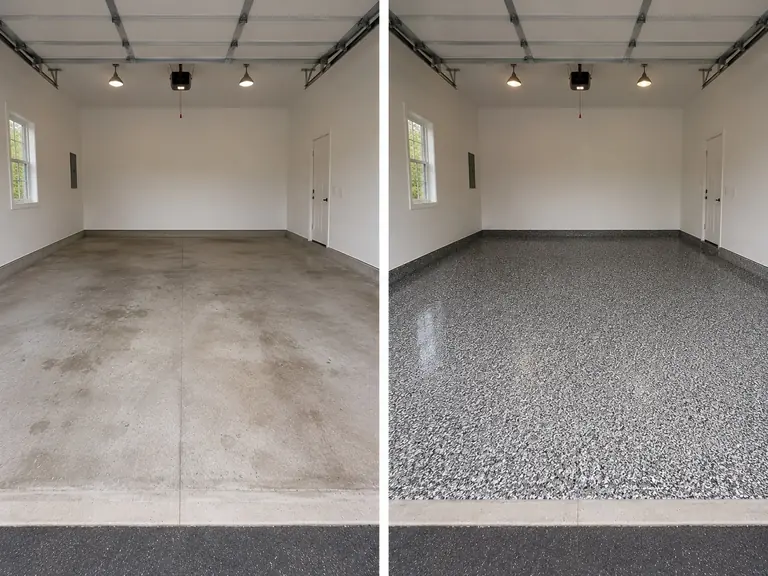
Snowmelt carries sand, road salt, brine, soil, leaves, tire residue, and vehicle fluids into the garage. When that mixture dries, tires and shoes can repeatedly grind the residue into traffic lanes.
Color can hide some residue; it does not remove it. A decorative blend may look cleaner between washings, but salt film, grit, oils, and standing water still need attention.
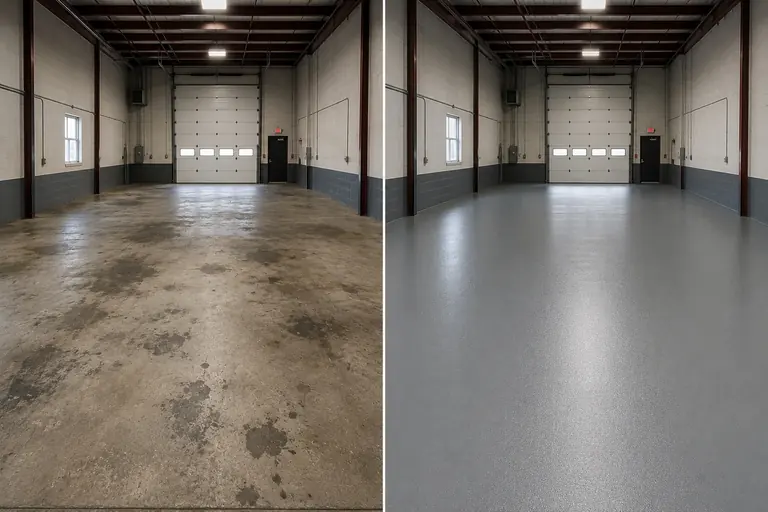
Spills and chemicals need a response plan
“Chemical resistant” never means every liquid can sit indefinitely
Identify the material
Use the container label, safety data, workplace procedure, or property record. Unknown material should be treated cautiously.
Protect people first
Ventilation, gloves, eye protection, isolation, absorbents, and disposal should follow the material and workplace requirements.
Contain and remove
Stop spread toward drains, edges, joints, doors, walls, stored goods, or uncoated concrete when this can be done safely.
Clean with a compatible method
Use the mildest approved cleaner that addresses the residue, then rinse or extract as directed. Never mix cleaning chemicals.
Inspect after drying
Look for staining, loss of gloss, softening, swelling, tackiness, discoloration, edge change, or texture change and document it.
Protection from tools, furniture, vehicles, and equipment
Concentrated pressure and sharp movement can damage a good floor
Load protection is not only about total weight. Small hard feet, metal edges, kickstands, jacks, engine stands, pallet jacks, appliance corners, dropped tools, embedded debris, and turning wheels concentrate force into small areas.
Lift or use clean rolling protection
Do not drag shelving, appliances, furniture, toolboxes, pallets, or machinery across the finish.
Spread point loads
Use broad, compatible pads or plates beneath sharp feet, stands, jacks, kickstands, and concentrated storage loads.
Keep wheels and pads clean
Metal chips, stones, screws, sand, and grit embedded in casters or protection pads can act like cutting tools.
Respect cure and service timing
Foot traffic, furniture, vehicles, cleaning, chemicals, and heavy equipment may have different return-to-use milestones.
Care changes with the room
Use one maintenance principle—but different procedures by space
The installed system may look similar across several areas while facing very different debris, liquids, traffic, sunlight, moisture, cleaning equipment, and consequences of downtime.
Garage & parking
Grit, hot tires, snowmelt, road salt, oil, leaves, storage, jacks, stands, and vehicle turning concentrate maintenance in tire paths and entry zones.
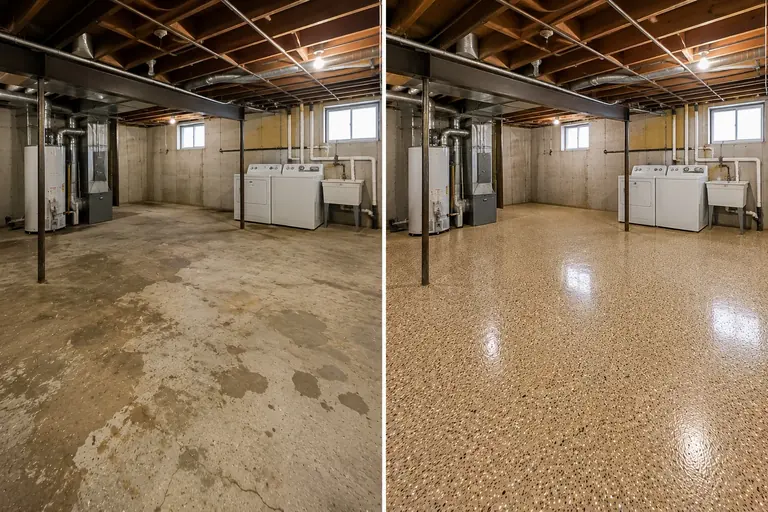
Basement & utility
Dust, laundry products, appliance leaks, floor drains, storage, furniture, pet areas, and lower traffic usually call for gentler but moisture-aware care.
Shop & commercial
Carts, tools, metal chips, oil, chemicals, cleaning schedules, fixed equipment, customer traffic, and sanitation requirements need documented procedures.
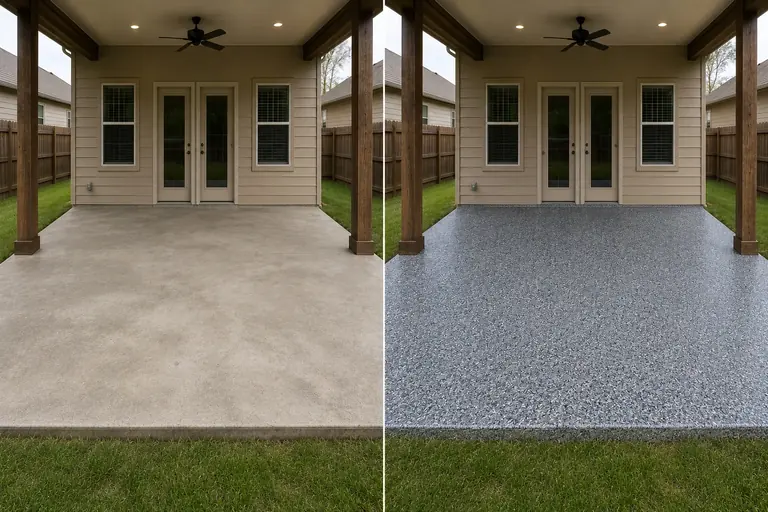
Patio & exterior
Sunlight, rain, snow, ice, leaves, soil, standing water, deicers, furniture, grills, drainage, and freeze-thaw exposure require outdoor-specific inspection and cleaning.
Exterior concrete needs its own maintenance plan
Cleaning cannot correct drainage, movement, heaving, or standing-water problems
Patios, driveways, walkways, entries, pool decks, and concrete pads face sunlight, rain, snow, ice, freeze-thaw exposure, soil, vegetation, furniture, grills, deicers, and snow-removal tools. Inspect the surrounding conditions as well as the coating.
Know when cleaning should stop and evaluation should begin
Changes in the surface may be maintenance, damage, contamination, movement, or adhesion—not simply dirt
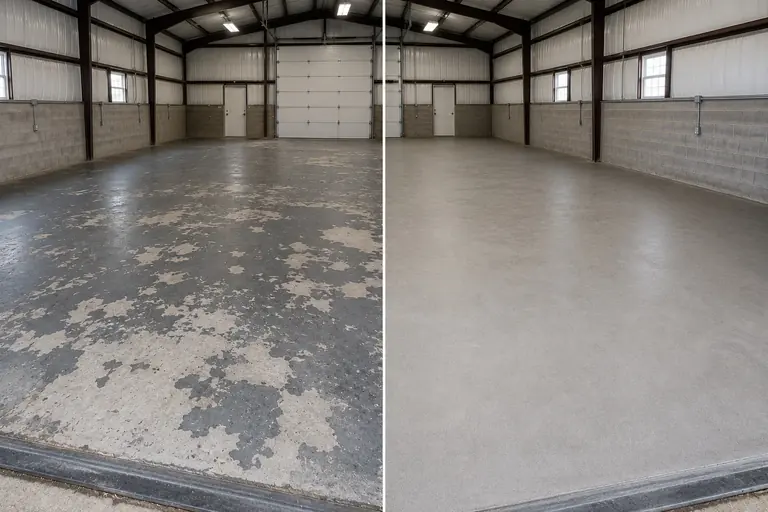
Do not grind, scrape, solvent-wash, paint over, or cover an unusual area until the condition is documented. Aggressive correction can erase evidence, enlarge damage, or make a compatible repair more difficult.
Create a property-level care record
A simple maintenance system is easier to repeat than scattered cleaning guesses
Keep system records
Store the estimate, installed system, color, texture, care instructions, product information, photos, date, warranty information, and installer contact.
List approved supplies
Record cleaner, dilution, tools, absorbents, pads, extraction method, rinse requirements, disposal steps, and prohibited products.
Set trigger-based tasks
Define what happens after snow, spills, production, events, heavy traffic, outdoor storms, tenant turnover, or equipment moves.
Inspect and photograph
Check the same edges, drains, thresholds, tire paths, equipment zones, exterior transitions, and prior repairs on a repeatable schedule.
Have a maintenance question about an existing Corridor floor? Share the project address, installation date, room, coating information, cleaner or spill involved, wide and close photos, and what changed. For floors installed by someone else, include every product or record you can locate.
Contact CorridorCleaning, salt, mats, pressure washing, damage, and repair questions
Coated concrete floor maintenance FAQs
How often should a coated concrete floor be cleaned?
Clean often enough that grit, road salt, soil, oils, food residue, process dust, or outdoor debris are not repeatedly ground into the surface. A lightly used basement may need occasional dust removal, while a winter garage, shop, commercial kitchen, entry, or production area may need frequent or scheduled cleaning. The correct interval depends on the installed system, texture, traffic, exposure, and maintenance guidance.
What cleaner should I use on a coated concrete floor?
Use the cleaner and dilution approved for the installed coating system. Start with the mildest effective option, follow the product label, test an inconspicuous area when appropriate, avoid unapproved solvents or highly abrasive products, rinse away residue, and never mix cleaning chemicals. When the coating chemistry or prior maintenance history is unknown, ask the installer or manufacturer before using a stronger cleaner.
Can I pressure wash a coated concrete floor?
Pressure washing may be acceptable for some exterior or heavy-use systems, but pressure, nozzle choice, distance, temperature, drainage, edges, joints, repairs, loose material, and the coating manufacturer’s guidance all matter. Do not assume an indoor decorative floor or damaged coating can be pressure washed safely.
How should road salt and winter grime be removed from a coated garage floor?
Remove loose grit first so it is not dragged across the floor, then use an approved cleaning solution and enough clean water to lift and remove residue rather than spreading it. Rinse and dry or squeegee as appropriate, keep drains and edges clear, and repeat before white salt film becomes heavily built up. Avoid aggressive scraping or unapproved acids.
Are rubber mats, tires, and floor protectors safe on coated concrete?
Some mats, rubber compounds, plasticizers, adhesives, moisture-trapping backings, hot tires, and concentrated loads can discolor, imprint, soften, or affect certain coatings. Use products confirmed compatible with the installed system, keep the underside clean and dry, move or inspect them periodically, and use broad load-distributing protection under heavy or sharp equipment.
What should I do if the coating starts peeling, bubbling, lifting, or feeling soft?
Stop exposing the affected area to water, chemicals, vehicles, or heavy equipment when practical. Photograph the condition, note when it appeared and what contacted the floor, and contact the installer before grinding, scraping, solvent cleaning, or covering it. Those symptoms can have different causes, and early documentation helps determine whether the issue is localized damage, contamination, moisture, movement, or a broader adhesion problem.
Can scratches, worn areas, or damaged sections be recoated?
Sometimes, but the repair depends on the original system, remaining adhesion, contamination, sheen, color, texture, ultraviolet exposure, damage depth, edges, and whether the existing layer can accept another compatible coat. A small touch-up may remain visible, while broader abrasion and recoating may produce a more consistent result. The area should be evaluated before a repair method is chosen.
Need Help Protecting or Evaluating a Coated Concrete Floor?
Share the project address, room or outdoor area, who installed the floor if known, approximate installation date, current use, cleaning products, spill or event involved, wide photos, close photos, and any peeling, bubbles, softening, staining, cracks, moisture, or wear. Corridor Floor Coatings can help determine whether the next step is routine care, a product-specific question, repair evaluation, removal, or a new project estimate.