
Free Estimates • State Licensed & Fully Insured • References Available
Floor Coating vs. Concrete Paint: What’s the Difference?
Compare concrete paint with a professionally prepared floor coating system, including use, preparation, old-paint removal, durability expectations, and project fit.
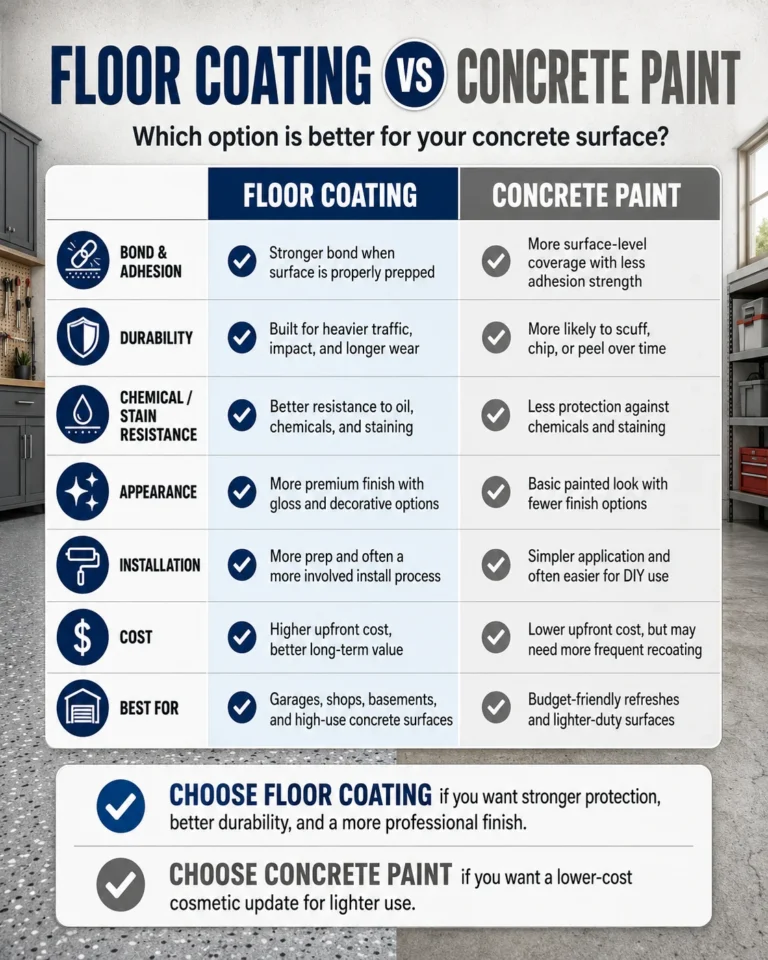
Compare the job each finish is being asked to do
Concrete paint changes color; a floor coating system is planned around the slab and its use
Concrete paint and professional floor coatings are not interchangeable labels. Paint may be a practical appearance refresh for some light-duty surfaces. A coating project usually involves a more complete scope: reviewing the concrete and existing material, preparing the surface, coordinating compatible layers, selecting the finish, and defining when traffic can return.
The better choice depends on the consequence of failure, the condition of the floor, traffic, moisture or contamination evidence, exposure, desired appearance, maintenance expectations, access, downtime, and budget—not simply which container costs less.
Quick comparison
Start with how the floor will be used
- Paint is a thin surface finish.
- A coating system uses prep, layers, and a planned finish.
- Traffic, moisture, sunlight, and cleaning all matter.
- The current slab must be checked first.
- A site visit helps match the system to the floor.
Start with scope—not vocabulary
Two products can look similar in a photo while asking very different things of the concrete
The finished color is only the visible layer. Preparation, film build, compatible components, intended traffic, application conditions, texture, and cure requirements separate a quick repaint from a planned floor system.
Appearance-first scope
Often centered on cleaning or basic preparation, applying a comparatively thin colored finish, and accepting the product’s stated limits and future maintenance needs.
Surface-and-use-first scope
Begins with the slab and existing material, then coordinates machine prep, accessible details, common repairs, compatible layers, decorative direction, texture, and return timing.
Side-by-side planning guide
Concrete paint vs. floor coating: compare the complete project
These are general planning differences. The actual product data, surface, installation conditions, manufacturer requirements, use, and maintenance plan control the final scope.
| Project factor | Concrete paint | Professional floor coating system |
|---|---|---|
| Primary goal | Usually an economical color or appearance change. | A coordinated finished surface planned around use, exposure, appearance, cleaning, and maintenance. |
| Surface preparation | Varies widely; some projects rely on cleaning, etching, scuffing, or the minimum required by the product. | Often includes mechanical preparation, removal of incompatible material, edge and detail work, and common repairs defined in the proposal. |
| Existing paint | May be repainted only if the existing layer and product instructions allow it. | Existing paint is evaluated for bond, compatibility, contamination, thickness, and whether removal is required before the new system. |
| Layer design | Commonly one product or a simple primer-and-paint approach. | May include compatible primer, base, decorative material, texture, and protective finish selected as a system. |
| Appearance choices | Typically solid color with the sheen and texture offered by the product. | May include solid color, decorative flake, metallic movement, visual density, sheen, and texture options coordinated with the room. |
| Traffic and exposure | Best judged by the exact product’s stated use and the owner’s tolerance for wear or touch-up. | Planned around vehicle paths, foot traffic, equipment, cleaning, chemicals, sunlight, weather, moisture evidence, and operational needs. |
| Project cost | Usually lower initial material and installation cost. | Usually a larger initial scope because preparation, removal, repairs, layers, detailing, and professional installation may be included. |
| Best fit | Light-duty, appearance-focused projects where product limits and future maintenance are acceptable. | Projects where the floor’s condition, use, finish, preparation, and return-to-use plan justify a more complete system. |
Why painted concrete can fail
Peeling is usually a chain of conditions—not one simple defect
Failure may begin at the concrete, inside an old layer, between incompatible materials, or at a high-stress area such as a tire path, doorway, drain, crack, or wet edge. Installing another finish without identifying the weak link can hide the problem temporarily while preserving the same failure path underneath.

Can you coat over concrete paint?
The new system cannot bypass the bond of the layer underneath it
Leaving paint in place may appear to save removal cost, but it also makes that existing layer part of the new system. If it releases, the new material can release with it even when the new layers bonded correctly to the old paint.
Identify what is present
Look for product history, thickness, multiple layers, peeling, tire pickup, scratches, soft areas, contamination, moisture patterns, and previous repairs.
Confirm soundness and compatibility
The proposal should define the preparation or removal approach. A small sound-looking area does not prove the entire floor is equally bonded.
Do not build on a known weak layer
Loose, flaking, contaminated, incompatible, or broadly unreliable material commonly needs removal so the new scope can begin from a more dependable surface.
The room changes the answer
Match the finish decision to the actual traffic, exposure, and consequence of downtime
A basement craft room, two-car garage, repair shop, customer lobby, and exterior patio should not receive the same recommendation simply because all five surfaces are concrete.
Tires, winter salt, snowmelt, storage, sunlight, and door edges
Review hot-tire paths, old paint pickup, drains, cracks, cabinets, cleaning, decorative goals, and when vehicles need to return.
Explore garage coatings → BasementMoisture evidence, old paint, utilities, furniture, and interior appearance
Separate a simple color refresh from a full lower-level finish plan, and address water intrusion or building issues before treating coating as the answer.
Explore basement coatings → Shop or businessEquipment, carts, fluids, cleaning, customers, and shutdown limits
Map traffic lanes, work cells, contamination, drains, fixed equipment, public-facing areas, phasing, and return by load.
Explore shop coatings → ExteriorSun, rain, snow, freeze-thaw exposure, drainage, and traction
Use an exterior-specific plan. Neither paint nor coating fixes heaving, structural movement, standing water, or poor drainage.
Explore exterior coatings →Paint may be reasonable when
A modest appearance refresh matches modest service expectations
- The exact product is approved for the concrete surface and exposure.
- Traffic, moisture, chemicals, weather, and abrasion are limited.
- The owner accepts visible wear, touch-ups, or a future repaint cycle.
- The floor does not require extensive removal, grinding, repair, or restoration.
- The cost of a more complete system is not justified by the way the area is used.
A coating system may make more sense when
The floor needs a planned surface—not just a new color
- Preparation and removal need to be defined as part of the project.
- Vehicles, equipment, customers, cleaning, or repeated traffic raise the consequence of early failure.
- Decorative flake, metallic, solid-color, texture, sheen, or visual consistency matters.
- Existing paint, contamination, repairs, details, edges, drains, or fixed equipment complicate the scope.
- Downtime, reopening, maintenance, and long-term use should be coordinated before work begins.
The most important difference may be invisible later
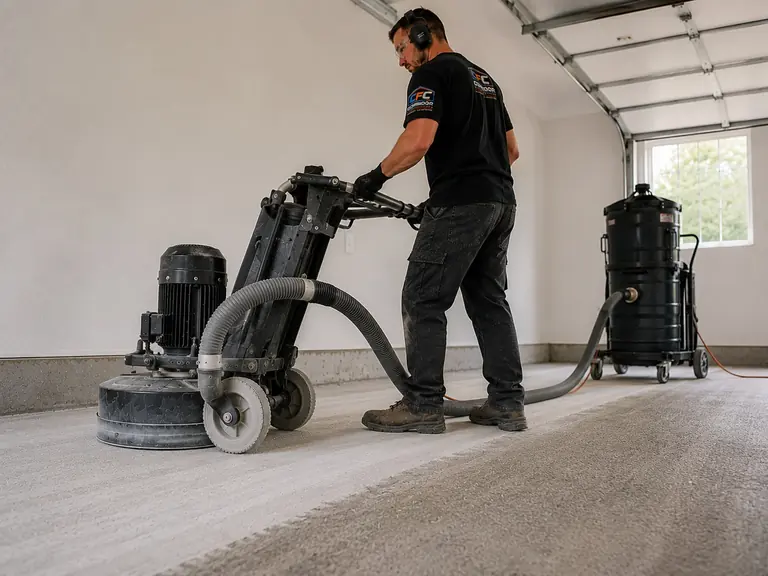
Preparation determines what the new material is actually bonded to
Machine prep can remove weak surface material, open the concrete to the required profile, and expose conditions that cleaning alone cannot correct. Removal, grinding, edges, corners, cracks, pitting, drains, contamination, and inaccessible areas should be discussed in the proposal rather than assumed.
- 01
Document the existing floor
Photograph the full surface, failure zones, doorways, drains, cracks, edges, fixed equipment, and areas hidden by storage.
- 02
Define what must be removed
Separate sound, compatible material from loose paint, unknown layers, sealers, adhesives, contamination, and weak concrete.
- 03
Create the required surface profile
Use the preparation method required by the selected compatible system rather than choosing preparation solely by speed or convenience.
- 04
Coordinate details and repairs
Clarify cracks, pitting, transitions, edges, drains, posts, stairs, equipment, and exclusions before installation.
Compare total project consequences—not just container price
The lowest initial cost and the best value are not always the same decision
Paint can be the right economical choice when its limitations match the space. A coating system can be the better value when preparation, appearance, traffic, downtime, maintenance, or the cost of repeating the work justify a more complete scope.
Finished look is only half the story
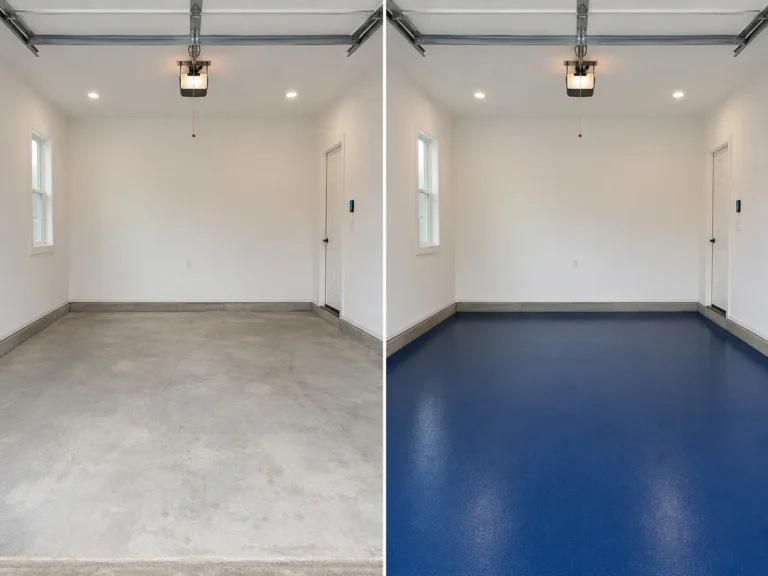
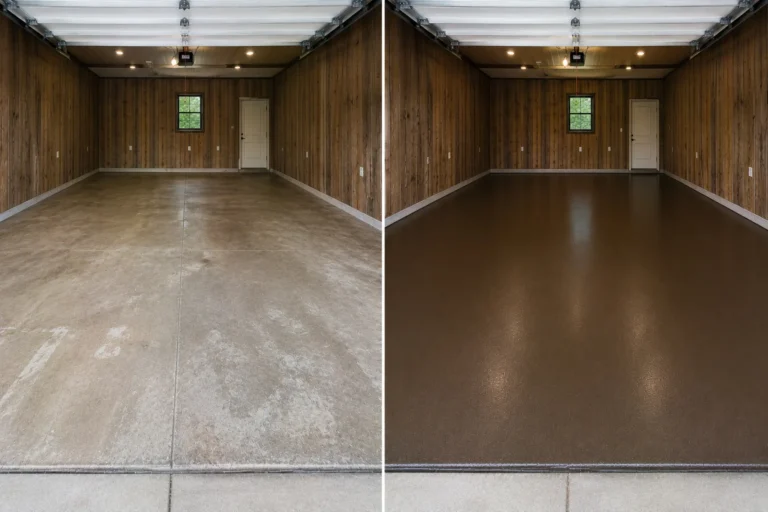
Use project photos for design inspiration—then evaluate what is underneath your floor
Photos can help narrow solid color, color flake, sheen, contrast, and visual movement. They do not reveal the old material, concrete strength, preparation, compatible layers, cure requirements, or whether the same scope fits your property.

Paint and coating questions
Floor coating vs. concrete paint FAQs
Is concrete paint the same as an epoxy floor coating?
No. Concrete paint is generally used as a comparatively thin decorative finish, while an epoxy or other professional floor coating may be one layer within a prepared, compatible system. Product labels, solids, application requirements, film build, preparation, and intended service conditions can differ substantially.
Why does concrete floor paint peel?
Peeling can be connected to weak or dusty concrete, insufficient preparation, moisture, contamination, sealers, incompatible existing material, tire traffic, weather exposure, product limitations, application conditions, or a combination of factors. The failure pattern and substrate should be reviewed before another material is installed.
Can a professional floor coating be applied over old concrete paint?
Sometimes existing material may remain only when the complete system allows it and the old material is sound, compatible, well bonded, and properly prepared. Loose, weak, peeling, contaminated, or incompatible paint commonly needs removal. Coating over an unknown weak layer transfers the project risk to that layer.
When might concrete paint be enough?
Paint may be reasonable for a low-demand appearance refresh when the product is approved for the surface, expectations are modest, traffic and exposure are light, frequent touch-up is acceptable, and the existing concrete does not require a more involved restoration plan.
When does a professional floor coating make more sense?
A prepared coating system may make more sense when the floor needs a more finished appearance, defined texture or decorative options, repeated vehicle or foot traffic, regular cleaning, a coordinated layer system, or a scope that includes removal, grinding, detail work, and common repairs.
Does a more expensive coating automatically last longer?
No. Price or chemistry alone does not guarantee performance. Concrete condition, moisture evidence, contamination, preparation, compatible layers, installation conditions, exposure, traffic, cleaning, maintenance, and realistic use expectations all influence the result.
What should I share when requesting an estimate for a painted floor?
Share the project city, room or facility type, approximate size, photos of the entire floor and failing areas, what material may already be present, how the space is used, moisture or contamination concerns, fixed equipment, access, desired finish, and when the area needs to return to use.
Ready to Replace Guesswork with a Floor-Specific Plan?
Share the space, current concrete, existing paint or coating, visible failure, daily use, exposure, cleaning needs, access, desired finish, and return-to-use schedule. Corridor Floor Coatings will organize the next step around the actual floor.