
Crack review • Slab movement • Moisture • Repair expectations
Can Cracked Concrete Be Coated?
Learn when cracked concrete can be coated, which cracks need more review, how repair and prep work, and what to expect before coating a floor.
- Review movement, displacement, moisture, joints, and surrounding concrete
- Separate cosmetic repair from structural, drainage, or replacement needs
- Set clear expectations before preparation and coating begin
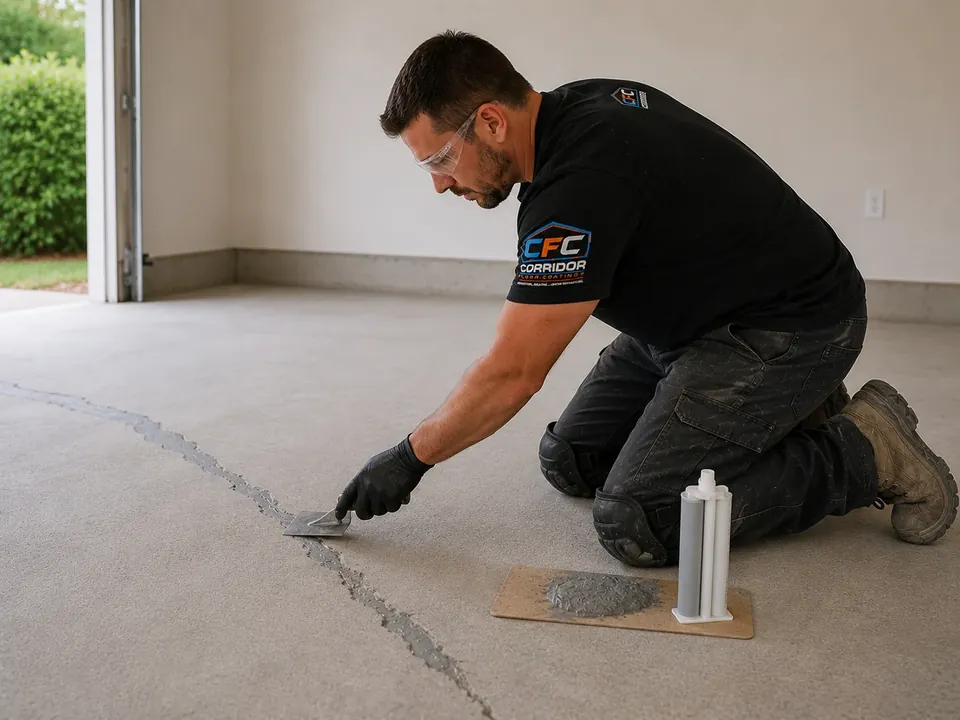
Cracked concrete can still become a great-looking finished floor
Start by understanding the crack, then build the right repair and coating plan
Many common cracks can be repaired as part of professional floor preparation. The estimate looks at the crack, the surrounding concrete, and how the space is used so the repair and finish can be planned together.
You do not need to identify the crack type yourself. Clear photos and a little history are enough to start the conversation.
A straightforward floor review
Four details help shape the best repair approach
Crack history
Has it stayed about the same, or has it opened, shifted, or returned after an older repair?
Water history
Share any seepage, plumbing event, snowmelt, dampness, or staining you have noticed.
Concrete condition
Sound edges, pitting, spalling, old filler, paint, or coating help define the preparation scope.
How the floor is used
Vehicles, tools, carts, furniture, foot traffic, cleaning, and outdoor exposure influence the repair and finish.
Common crack conditions
Six common starting points—and a clear next step for each
A quick review helps determine whether the crack can be included in the coating project.
Hairline or shrinkage cracks
Often included in routine repair when the line appears stable.
Wider cracks
Reviewed for width, depth, edges, and movement before repair.
Broken or pitted edges
Loose areas can often be rebuilt during preparation.
Control joints and saw cuts
Handled separately so movement and appearance stay predictable.
Moisture-stained cracks
Water history helps shape the preparation plan.
Uneven slab panels
Height changes may need a closer review before coating.

A closer look creates a better plan
The shape of the crack helps narrow the repair approach
Hairline and shrinkage cracks
Often handled as part of routine preparation when the line appears stable and the surrounding slab is sound.
Wider cracks
May need additional cleaning, repair volume, and movement review before the coating layers are installed.
Control joints and saw cuts
Reviewed as intentional slab features so the selected treatment fits traffic, cleaning, movement, and appearance goals.
Pitting, spalling, and broken concrete
Loose material is removed and practical repairs are coordinated with the surrounding floor preparation.
Create a cleaner, more unified floor
Repair and finish work together before the coating is installed
The repair plan can clean the crack, remove weak edges, fill the void, rebuild damaged areas, and prepare the surrounding concrete for a consistent finish.
The goal is a clean, finished floor with expectations matched to the concrete you have.
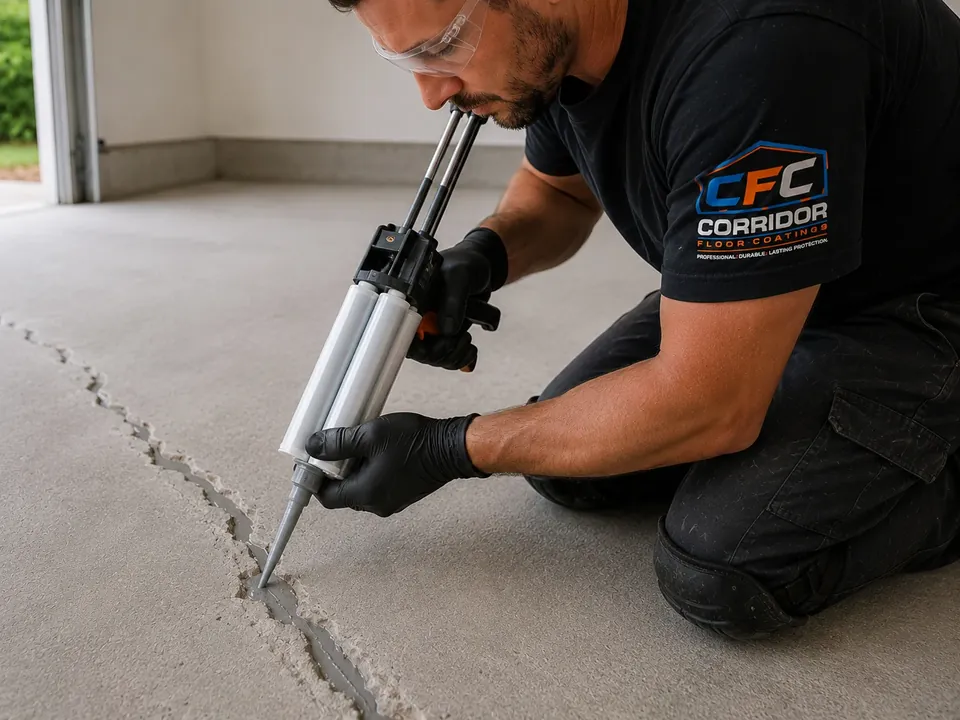
Match the repair to the space
The floor’s daily use helps shape the right repair and finish
Vehicles and winter traffic
Plan around tire paths, salt, drains, thresholds, and routine cleaning.
Comfort and utility areas
Coordinate stairs, posts, appliances, finished rooms, and water history.
Equipment and work zones
Account for carts, fixed equipment, fluids, impacts, and cleaning.
Weather and drainage
Review slope, water flow, freeze-thaw exposure, edges, and texture.
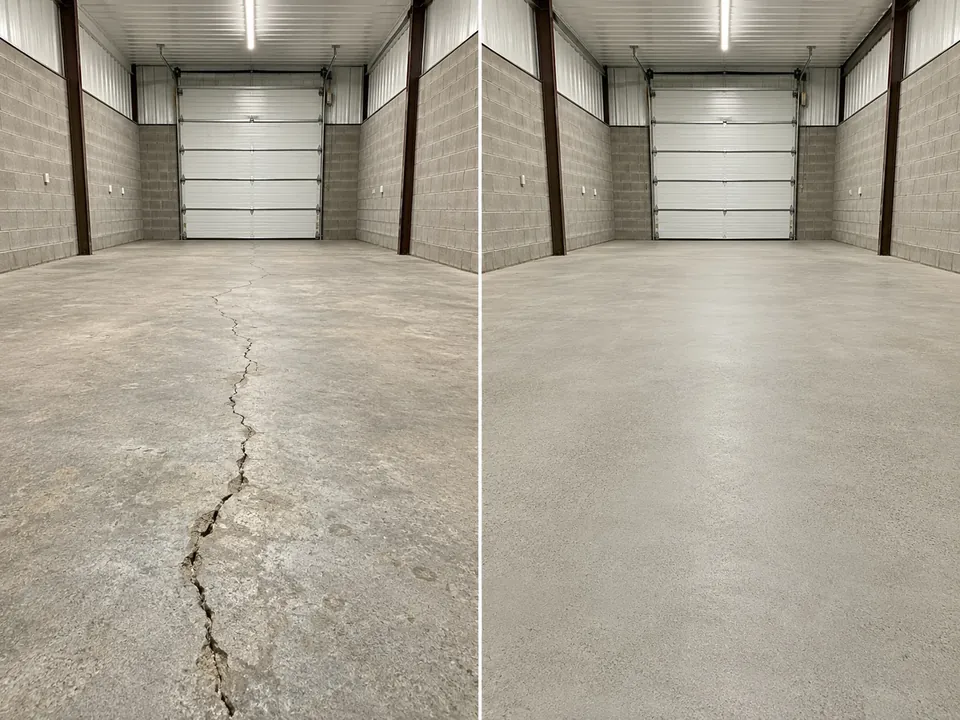
From crack to finished floor
Four coordinated steps keep the project simple
- 01
Review
Confirm the crack, surrounding slab, access, and intended use.
- 02
Repair
Remove weak material and complete the included repair work.
- 03
Coat
Install the selected color, texture, and protective system.
- 04
Reopen
Follow clear timing for the way the space will be used.
An easy way to start
Four details are enough to begin your estimate
Whole floor
Show the room, doors, drains, and connected concrete.
Crack details
Include close views of the line, edges, filler, or damage.
Simple history
Share changes, water events, or previous repair work.
Finished goal
Tell us how the space is used and the look you prefer.
No diagnosis required. Send the floor as it is, and Corridor will organize the practical repair and coating options.
Request Free EstimateCrack repair and coating questions
Cracked concrete coating FAQs
Can hairline cracks in concrete be repaired before coating?
Often, yes. Stable hairline and shrinkage cracks are common on concrete floors and can frequently be included in the preparation and repair plan when the surrounding slab is sound. The estimate confirms the crack condition and selects a compatible repair method.
Will repaired cracks disappear completely under a floor coating?
Repair can create a smoother, more continuous finished floor and decorative flake can help soften minor visual variation. Because concrete can continue to move, a repaired line may remain faintly visible or reappear later, so the finish and expectations should be discussed before installation.
Can wider or uneven cracks be repaired and coated?
Sometimes. Wider cracks, broken edges, or uneven slab panels simply need a closer look so the right repair path can be recommended. When significant slab movement is present, Corridor can explain whether another concrete or foundation professional should address that condition first.
Should control joints and saw cuts be filled before coating?
The best treatment depends on how the joint functions, how traffic crosses it, the desired appearance, and the selected coating system. Corridor can explain whether the joint should remain visible, receive a compatible treatment, or be handled another way.
Can a cracked basement floor be coated if moisture has been present?
Many basement floors can still be considered, but the water history should be discussed first. Photos and an estimate help separate old staining from an active moisture source and determine the most practical next step.
Can pitted or spalled concrete be repaired and coated?
Often, yes, when the loose material can be removed and sound concrete remains. The estimate reviews the depth and extent of the damage so preparation, patching, and the coating system can be priced together.
What should I send for an estimate on cracked concrete?
Send wide photos of the whole floor, close photos of the cracks and damaged areas, the project address, approximate size, how the space is used, and any history you know about water or movement. You do not need to diagnose the crack yourself.
Ready to See What Is Possible for Your Cracked Floor?
Send the project address, approximate size, whole-floor photos, close crack photos, how the space is used, and the finished look you want. Corridor Floor Coatings will review the floor and organize a practical preparation, repair, coating, and estimate plan.