
Garages • Hobby shops • Service bays • Working floors
Best Floor Coating Options for Shops and Garages
Compare garage and shop floor coating options by concrete prep, traffic, chemicals, texture, maintenance, appearance, downtime, and return-to-use needs.
- Compare systems by slab condition, traffic, chemicals, texture, and maintenance
- Plan lifts, equipment, drains, doors, winter salt, access, and downtime together
- Use project-specific timing for foot traffic, vehicles, cleaning, and heavy equipment

The best option is a complete system matched to real use
Start with the concrete, traffic, exposure, and shutdown—not a chemistry name
Garages and shops concentrate more variables than most rooms. A floor may see vehicles, winter salt, tools, carts, lifts, oil, fuel, cleaning chemicals, welding, sunlight at open doors, fixed equipment, storage, drains, and pressure to reopen quickly.
Those conditions affect preparation, repairs, layer roles, thickness, texture, finish, maintenance, and cure. Two products described with the same broad chemistry can perform differently, and a premium coating installed over a weak or contaminated surface is still built on a weak foundation.
Screen the project before comparing finish samples
Six questions narrow the useful options quickly
A productive estimate starts with how the floor fails, how the room works, and what cannot be interrupted. Color matters—but it comes after compatibility and operations.
What is on the slab now?
Bare concrete, curing material, sealer, paint, old coating, patch, adhesive, oil, rust, or unknown residue changes the preparation scope.
What crosses the floor?
Tires, casters, pallet jacks, carts, creepers, engine stands, lifts, forklifts, foot traffic, animals, and snow equipment apply different loads.
What contacts the finish?
Water, road salt, oil, fuel, cleaners, solvents, battery products, process chemicals, hot parts, sparks, and sunlight need to be named specifically.
How is it cleaned?
Dry sweeping, scrubber, mop, hose, pressure washing, extraction, drains, sanitation, and disposal affect texture and system selection.
What stays in place?
Lifts, benches, cabinets, shelving, compressors, drains, posts, machinery, walls, and occupied zones shape edges, access, phasing, and repairs.
When must each load return?
Foot traffic, storage, vehicles, cleaning, chemicals, rolling equipment, jacks, and heavy machinery may require separate reopening milestones.
Match the floor to the work happening above it
Four shop and garage use patterns need different planning
Appearance, texture, cleanability, chemical exposure, access, downtime, and load protection should be set by use zone. One building can contain more than one zone.
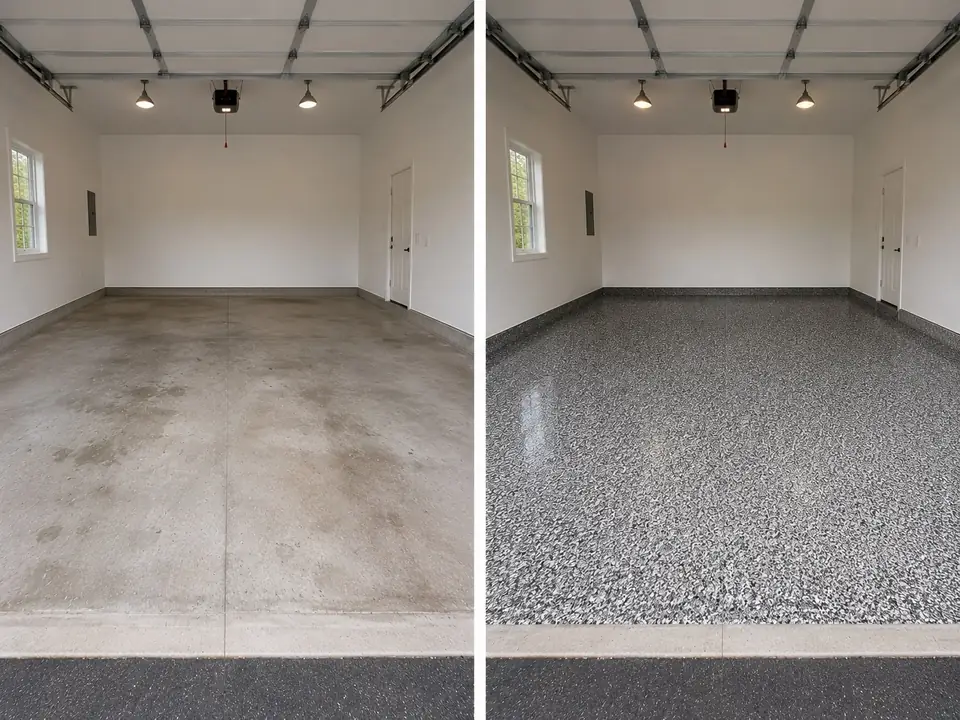
Residential parking garage
Prioritize winter grit, snowmelt, hot tires, turning, storage, door exposure, color, texture, cleaning, and when vehicles can return.
Explore this service →
Hobby or multipurpose shop
Map benches, carts, tools, dust, dropped parts, outlets, cabinets, clear work zones, storage, and whether the room also needs to look finished.
Explore this service →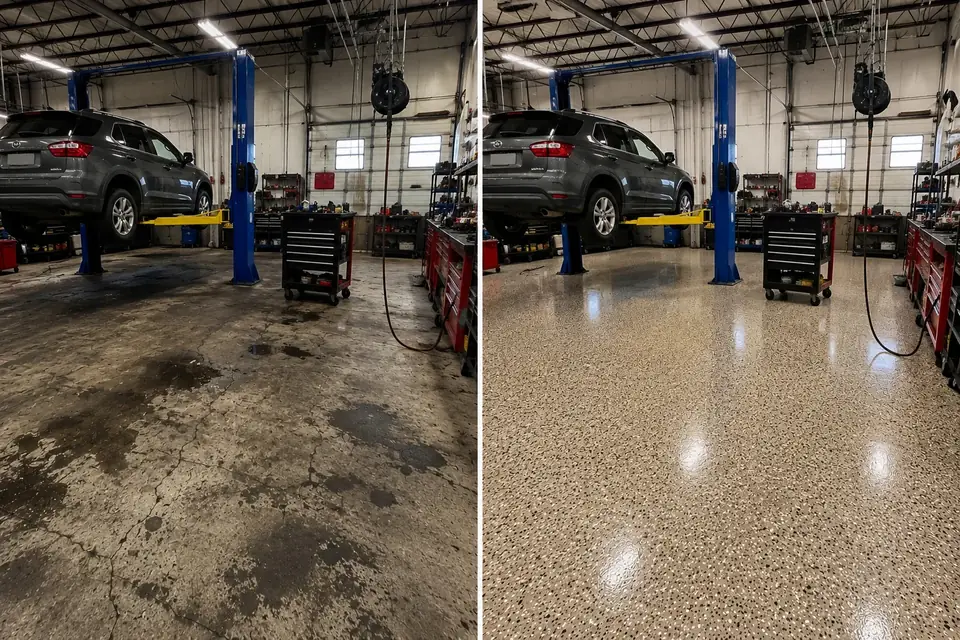
Auto or service bay
Review lifts, anchors, jacks, stands, tires, oils, fuels, cleaners, metal chips, hot work, drains, vehicle routes, shutdown, and reopening by load.
Explore this service →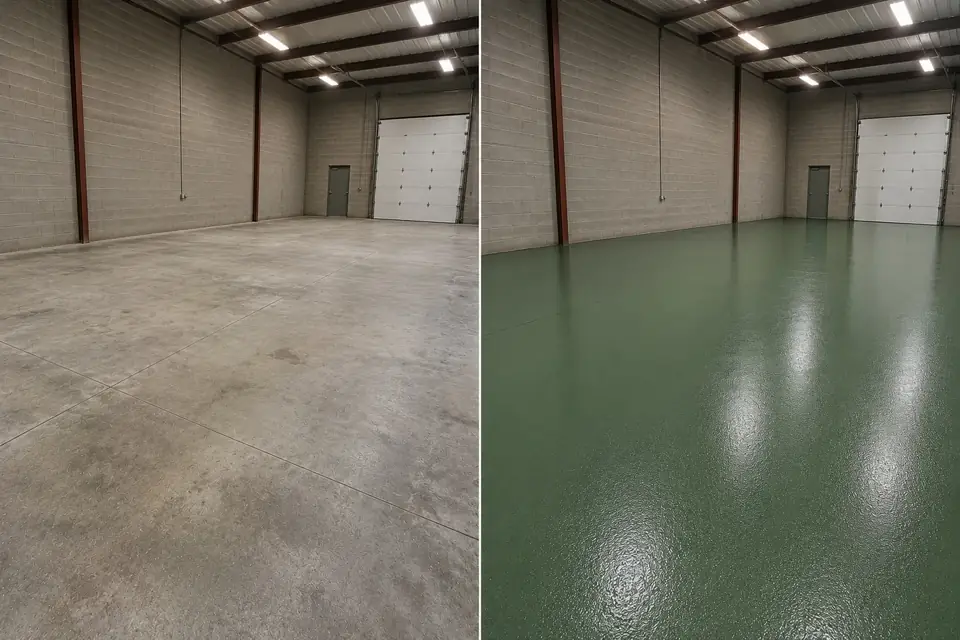
Equipment building or pole barn
Account for large doors, weather, tracked soil, machinery, concentrated storage, slab condition, seasonal temperature, access, and phased use.
Explore this service →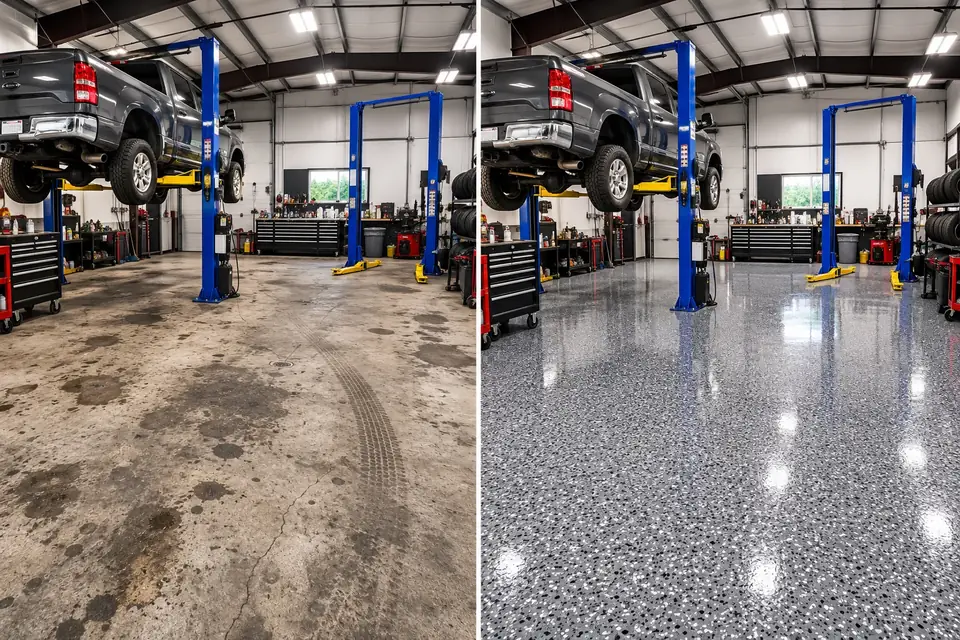
Understand what the proposed layers are doing
A strong proposal explains preparation, adhesion, build, finish, and protection
Create a sound, clean, profiled foundation
Removal, grinding, detail work, cleaning, crack and surface repair, contamination control, edges, joints, and transitions belong in the scope.
Match the first compatible layer to the slab and system
The first layer may serve adhesion, wetting, penetration, moisture-related, or other project-specific roles. It is not interchangeable by name alone.
Provide the intended body, coverage, color, or broadcast
Layer thickness, solid color, decorative flake, repair visibility, floor flatness, coverage, and processing affect the finished result.
Complete sheen, texture, exposure, and service properties
The final compatible layer helps establish cleanability, appearance, ultraviolet response, abrasion behavior, texture, and chemical limitations.
Not every system uses every layer in the same way. The installer should describe the actual sequence, products, cure conditions, and return-to-use plan for the project.
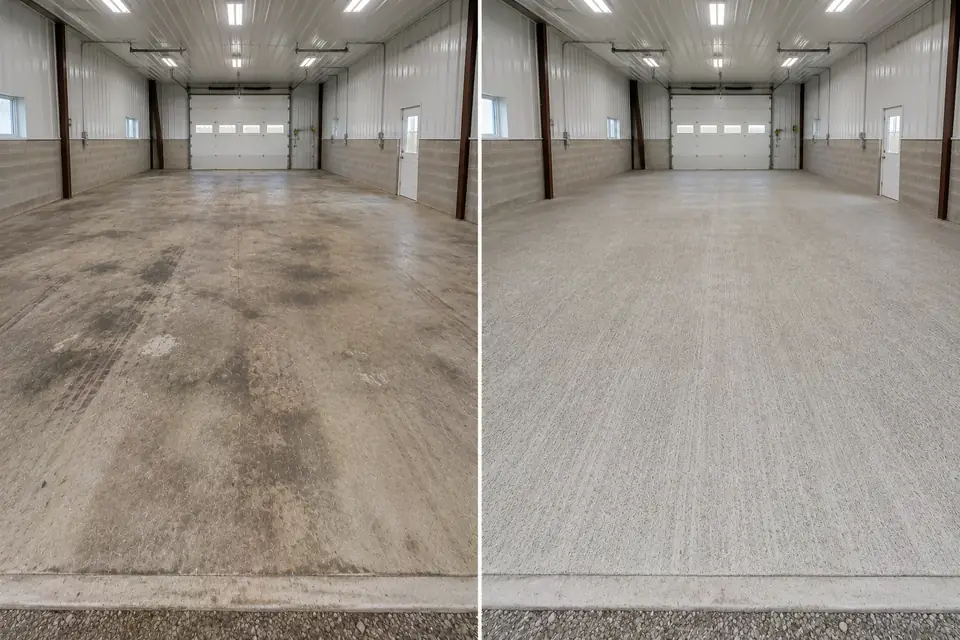
Preparation often decides whether the floor is worth coating
Old paint, weak coating, oil, repairs, and damaged concrete cannot be hidden by a better label
Shop and garage slabs can contain oil below the visible surface, tire-path wear, paint at edges, adhesive, rust, salts, curing products, densifiers, unknown sealers, old patches, moving cracks, spalling, and contamination around equipment. Those conditions must be exposed and evaluated.
Demanding exposure requires named conditions
“Chemical resistant” and “industrial strength” are incomplete without the actual use
Resistance depends on the product, concentration, temperature, dwell time, frequency, cleaning, scratches, edges, joints, and whether the material is allowed to sit. Hot work and concentrated loads create separate concerns.
Identify exact products
Oil, fuel, brake cleaner, degreaser, battery products, coolant, fertilizer, solvents, food acids, dyes, and process chemicals should be listed—not grouped as “shop chemicals.”
Separate normal temperature from hot work
Exhaust, hot tires, engine parts, welding sparks, slag, cutting, grinding, and radiant heat can affect a finish differently. No coating is fireproof.
Plan concentrated pressure and movement
Jacks, stands, lift posts, casters, steel wheels, pallet jacks, machinery feet, turning tires, dropped tools, and embedded grit need load distribution and operating rules.
Match texture to the real procedure
Aggressive texture may improve practical traction but can increase soil retention and cleaning time. Scrubbers, mops, hoses, extraction, drains, and sanitation schedules matter.
Traction and cleanability are a managed tradeoff
Do not choose texture from a dry sample alone
Review slope, water, snow, oil, dust, footwear, tires, turning, entrances, drains, cleaning tools, public access, and who may use the space. No finished floor is completely slip-proof.
Downtime is part of the system decision
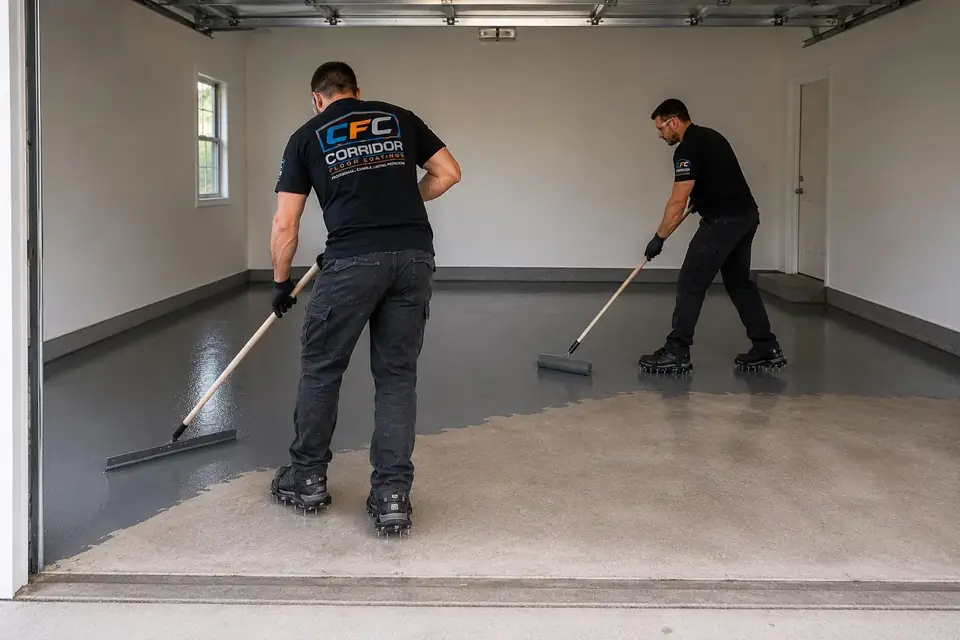
Plan clearing, preparation, coating, cure, and staged reopening as separate steps
- 01
Clear and document
Remove movable items, identify what remains, photograph equipment and edges, mark utilities, and plan storage or alternate operations.
- 02
Prepare and repair
Removal, grinding, detail work, crack or surface repair, cleaning, and inspection can change with conditions exposed during preparation.
- 03
Install and cure by layer
Temperature, humidity, ventilation, floor size, product sequence, thickness, broadcast, and detail work affect the installation window.
- 04
Reopen by load
Foot traffic, storage, vehicles, cleaning, chemicals, rolling equipment, jacks, lifts, and heavy machinery may return at different times.
Prepare for a useful estimate
Bring the information that changes the specification
Show the whole floor
Provide wide photos, close photos, entrances, drains, walls, equipment, cracks, failed areas, oil zones, patches, and exterior transitions.
Describe the work
List vehicles, carts, lifts, tools, machinery, chemicals, hot work, public traffic, cleaning equipment, storage, and seasonal exposure.
Define the shutdown
Share operating hours, alternate parking or work space, what cannot move, project phasing, and required reopening milestones.
Choose the finish direction
Discuss color, decorative flake, visibility, brightness, zoning, texture, sheen, surrounding finishes, and maintenance tolerance.
You do not need to select epoxy, polyaspartic, flake, or a topcoat before requesting an estimate. Share the floor and its use first. Corridor can then explain which complete system directions are practical and what each layer is intended to do.
Request Free EstimateSystems, preparation, traction, loads, chemicals, cracks, and timing
Shop and garage floor coating FAQs
What is the best floor coating for a residential garage?
There is no universal best product for every garage. A layered decorative flake system is a common direction because it can combine visual depth, practical texture, and a finished appearance, but the actual recommendation depends on concrete condition, old paint or coating, cracks, moisture evidence, sunlight, winter salt, vehicle use, cleaning expectations, color goals, and return-to-use needs.
Is epoxy or polyaspartic better for a shop or garage floor?
The chemistry names describe broad product families, not one identical performance level. Epoxy and polyaspartic materials may serve different roles within a layered system, and formulation, preparation, thickness, cure conditions, ultraviolet exposure, topcoat, texture, and intended use all matter. Compare the complete proposed system rather than choosing from the label alone.
Can a coated floor handle vehicle lifts, jacks, welding, chemicals, and heavy equipment?
Some systems can be planned for demanding working areas, but each exposure must be reviewed. Lift anchors and posts, jack wheels, stands, concentrated loads, hot work, sparks, welding slag, battery acid, brake cleaner, fuel, oil, solvents, tires, metal chips, and equipment movement create different risks. No coating should be treated as structural reinforcement, fireproof protection, or universal chemical containment.
How should slip resistance be planned for a shop or garage?
Texture should be selected around water, snow, oil, dust, footwear, tires, slope, drains, cleaning tools, and the people using the floor. More texture may improve practical traction in some conditions but can hold soil and make cleaning slower. No finished floor is completely slip-proof, especially when contaminated or wet.
Does old garage paint or a failed shop coating need to be removed?
Weak, peeling, incompatible, contaminated, or poorly bonded material generally cannot be treated as a reliable foundation for a new system. The existing layer should be tested and the required removal, edge work, grinding, repairs, detail preparation, disposal, and transition plan should be included in the quoted scope.
How long before vehicles or equipment can return to a coated shop floor?
Foot traffic, light storage, vehicles, cleaning, chemicals, rolling loads, jacks, lifts, and heavy equipment may have different return-to-use milestones. Timing depends on the complete system, product data, layer thickness, temperature, humidity, ventilation, repairs, floor size, access, and service conditions. Use the project-specific written schedule rather than a universal one-day promise.
Can a cracked or pitted shop floor still be coated?
Sometimes, after the slab and damage are reviewed. Crack width, movement, joints, pitting, spalling, moisture, contamination, previous repairs, edges, and the intended loads all matter. Repairs can improve the surface for a compatible coating system, but a coating is not a structural repair and cannot guarantee that concrete will stop moving or cracking.
Ready to Plan a Shop or Garage Floor Around Real Use?
Share the project address, floor size, wide and close photos, existing paint or coating, cracks, stains, fixed equipment, vehicles, carts, lifts, chemicals, cleaning method, color direction, access, and required reopening dates. Corridor Floor Coatings will evaluate the slab and explain the practical system options before the scope is finalized.