
Free Estimates • State Licensed & Fully Insured • References Available
Why Floor Coatings Peel—and How to Rebuild the Floor
Learn why floor coatings peel and how removal, concrete preparation, repairs, and the right replacement system create a better finished floor.

A failed finish can become a better floor
Turn peeling paint or coating into a clean, professionally rebuilt surface
Peeling, flaking, bubbling, or lifting is a sign that the old floor needs more than another layer on top. A successful replacement starts by identifying the likely cause, removing weak material, preparing the concrete, and matching the new system to the room.
Corridor Floor Coatings can organize that reset into one clear project—from old-material removal through the finished color, texture, and return-to-use plan.
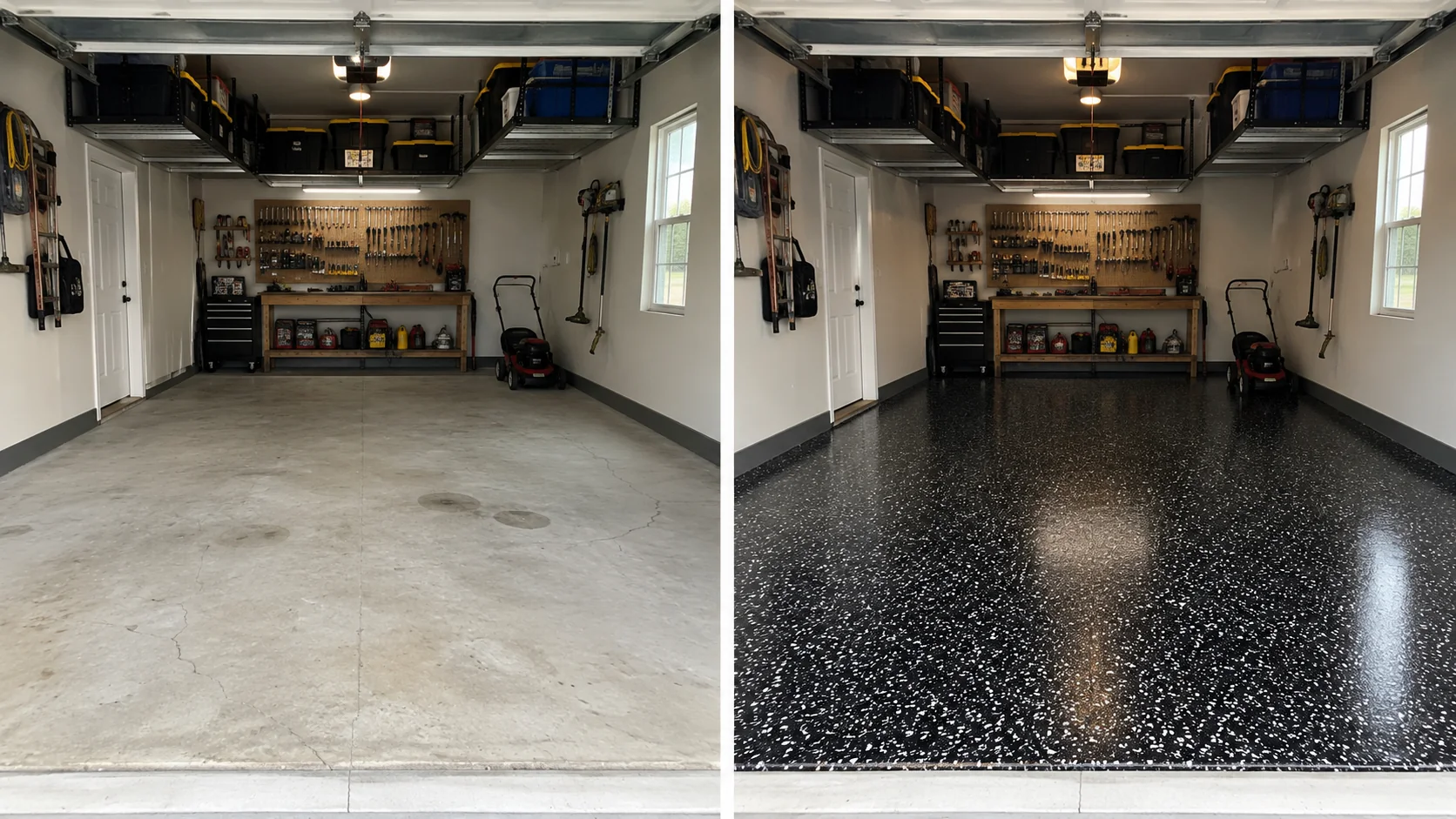
Most failures begin with an identifiable starting condition
Five common causes help shape the right replacement plan
Weak old material
Paint, sealer, or coating beneath the visible finish may be loose, incompatible, or poorly bonded.
Insufficient surface profile
Concrete that remained too smooth or dusty may not have provided the selected layers the surface they needed.
Oil or contamination
Vehicle fluids, grease, cleaners, residues, or embedded contaminants can interfere with a dependable bond.
Moisture or exposure
Indoor moisture, outdoor weather, sunlight, drainage, and temperature can change the system the floor requires.
Traffic or system mismatch
Parking, rolling equipment, chemicals, cleaning, and heavy use may exceed what the old material was designed to handle.
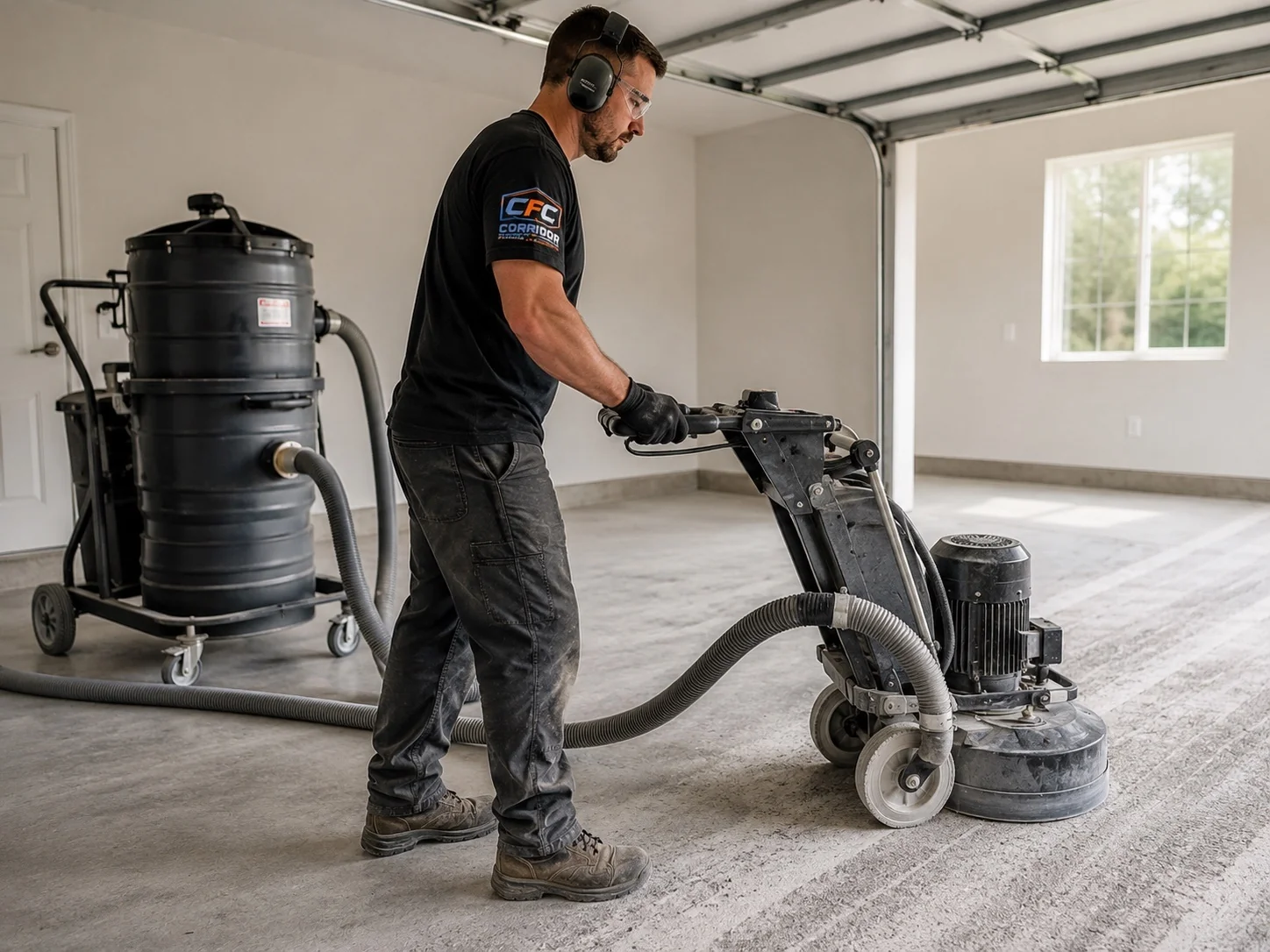
From peeling floor to fresh finish
A clear four-step plan rebuilds the project from the concrete up
- 01
Review the failure pattern
Look at where the coating lifted, what remains bonded, the history of the floor, and how the space is used.
- 02
Remove weak material
Take away failed paint, coating, residue, or surface layers that should not remain beneath the new system.
- 03
Prepare and repair the concrete
Mechanically profile the slab and complete the accessible repairs included in the approved scope.
- 04
Install the matched finish
Apply compatible layers, color, decorative broadcast, texture, and clear protection for the room and traffic.
The location of the peeling provides useful clues
Different failure patterns point the estimate toward different questions
Review road salt, moisture, fluids, repeated pressure, heat, and the garage system beneath the vehicle.
Check detail preparation, transitions, water entry, neighboring surfaces, and traffic crossing the boundary.
Look for localized contamination, old patches, repairs, residues, or differences in the concrete surface.
Evaluate the old material, overall preparation, concrete profile, moisture conditions, and layer compatibility.
Review moisture, trapped air, temperature, application conditions, and what is happening beneath the finish.
Consider sunlight, weather, drainage, slope, freeze-thaw exposure, edges, and the exterior system used.
Real removal and preparation work from Eastern Iowa
See failed material being cleared before the new floor is installed
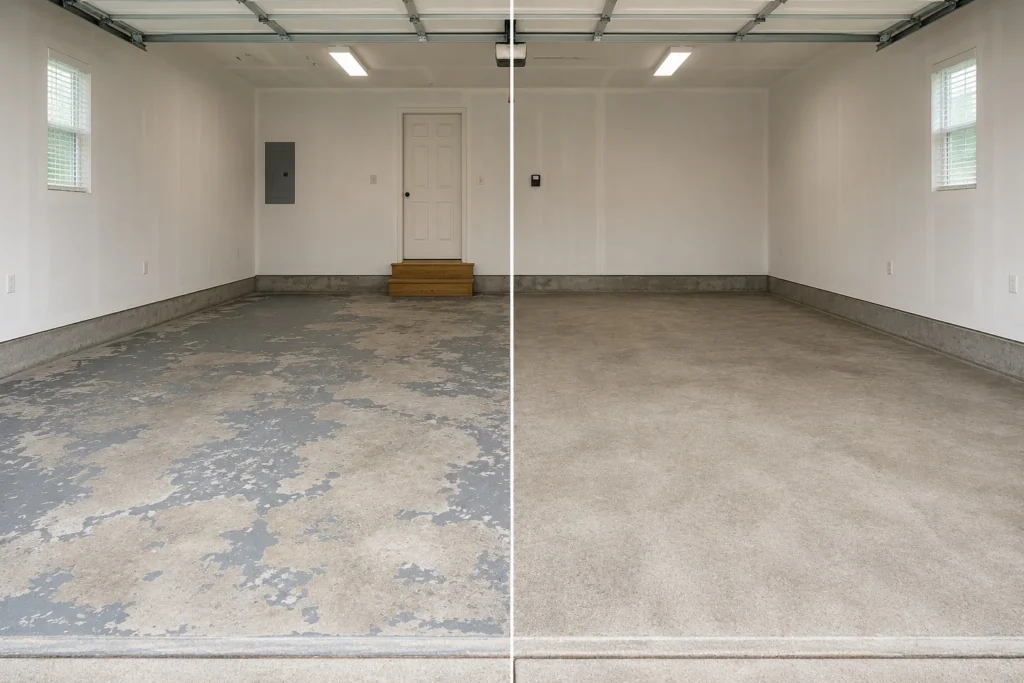
Remove peeling concrete paint
Weak paint is cleared so the replacement system can begin with prepared concrete.
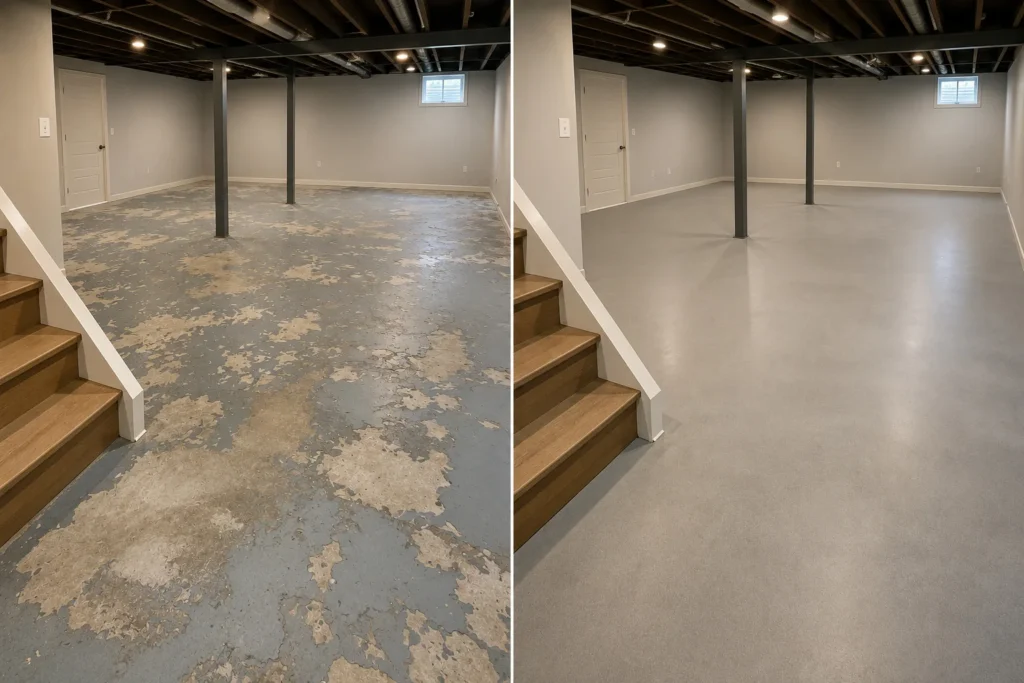
Reset a lower-level floor
Old material is removed while walls, edges, access, and the occupied home remain part of the plan.
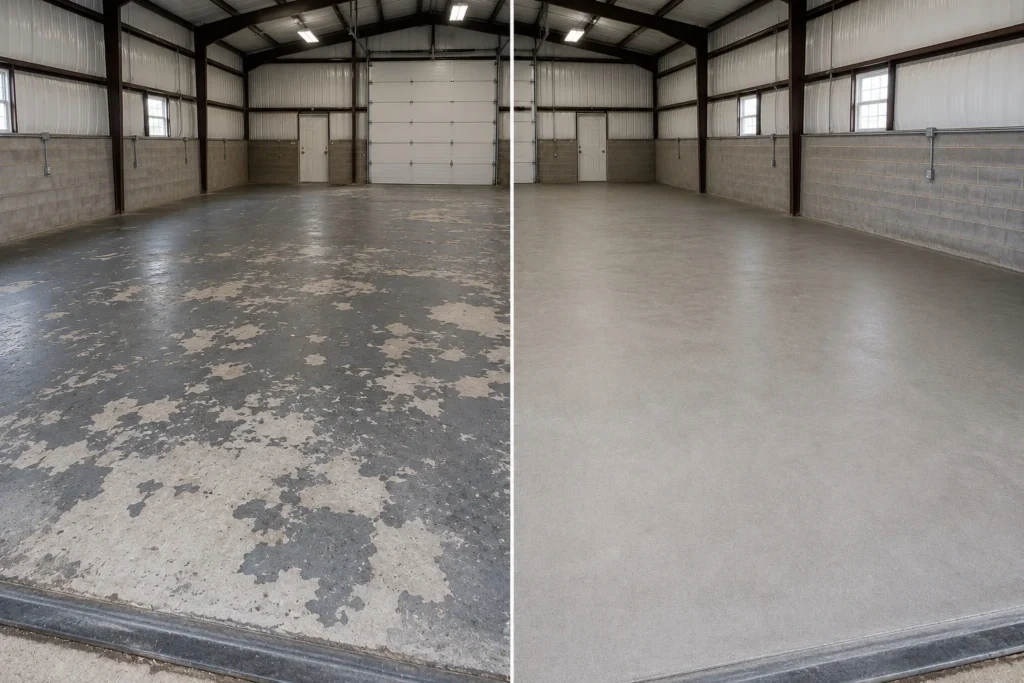
Prepare a working floor again
Removal and preparation create a cleaner starting point for equipment, traffic, and shop use.
Rebuild the floor for the work it actually does
The replacement system should fit the room—not only the color
Garages
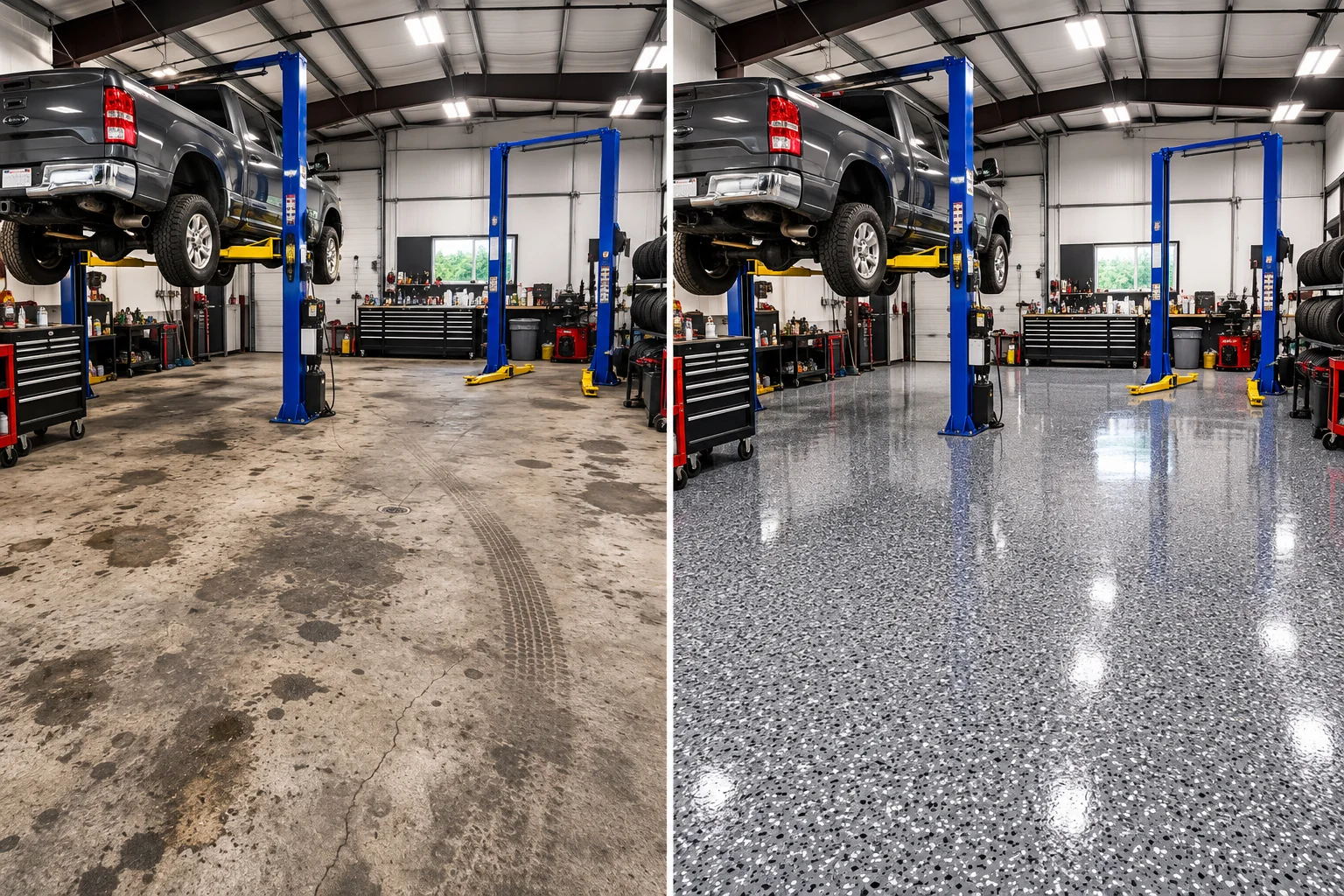
Coordinate vehicle traffic, tire paths, road salt, oil, doors, edges, decorative flake, cleaning, and parking timelines.
Basements and utility areas
Plan around stairs, walls, storage, appliances, drains, moisture history, occupied access, and the desired finished look.
Shops and commercial floors
Account for equipment, chemicals, rolling loads, fixed features, work zones, cleaning, shutdowns, and phased installation.
Exterior concrete
Match the system to sunlight, rain, snow, drainage, slope, joints, edges, neighboring surfaces, and seasonal use.
Know what the floor reset includes
A clear replacement estimate connects removal, preparation, and the finished system
The scope should make it easy to understand what old material is being addressed, how the concrete will be prepared, which repairs are included, and what the new floor will look like when the work is complete.
- The exact project areas and existing materials
- Old paint, coating, sealer, adhesive, or residue being removed
- Mechanical preparation and accessible edge work
- Included crack, pitting, patch, or damaged-area repairs
- Compatible coating layers, color, decorative finish, texture, and cleanup
- Clearing, access, schedule, and return-to-use guidance
Peeling floor coating questions
Helpful answers before planning a replacement floor
Why do floor coatings peel?
Peeling commonly begins when the old material is weak, the concrete was not prepared for the selected system, contamination interfered with adhesion, moisture or exposure was not accounted for, or the coating system did not fit the traffic and use of the space.
Can a peeling floor coating be repaired?
Localized repairs may be possible when the surrounding coating is still well bonded and the concrete is suitable. Widespread peeling usually calls for broader removal and preparation so the replacement system starts from a dependable surface.
Can a new coating be installed over peeling paint or epoxy?
Loose, lifting, or poorly bonded material should not be buried beneath a new system. The estimate should identify what must be removed and how the remaining surface will be prepared before new compatible layers are installed.
Does concrete grinding remove old floor coating?
Mechanical grinding can remove many paints, coatings, residues, and weak surface layers while creating a profile for the replacement system. The exact equipment and process depend on the material, thickness, concrete, edges, access, and project size.
Why does a garage floor sometimes peel in the tire paths?
Tire paths combine repeated pressure, heat, road salt, moisture, dirt, and vehicle fluids. Peeling in those areas can also reveal weak preparation or an old material that was not suited to garage use.
Can moisture contribute to coating failure?
Yes. Moisture conditions can affect adhesion and may show up as lifting, bubbling, discoloration, or recurring failure. The floor and surrounding conditions should be reviewed before a replacement system is selected.
What should a replacement estimate include?
A clear estimate should identify the project areas, old-material removal, concrete preparation, accessible repairs, compatible coating layers, finish, texture, clearing, access, schedule, cleanup, and return-to-use guidance.
Ready to Replace a Peeling Floor?
Share the address, room type, approximate size, current photos, known floor history, and the finish you want. Corridor Floor Coatings will organize the removal, preparation, repair, and replacement system into one clear estimate.